If you are planning to enter the construction supply business, one common question that comes up is whether to start a cement dealership or become a cement distributor. Both alternatives belong to the cement supply chain, yet their functions, tasks, and the size of activity are rather dissimilar.
As an individual seeking opportunities in the building materials market, it is notable that before deciding to do so, it is important to know these differences. Whether you are a small retailer, a contractor looking to expand, or a local entrepreneur searching for cement dealers near me to study the market, knowing how dealerships and distributors operate can help you choose the right path.
It is time to deconstruct the major differences in a straightforward and accessible manner.
What Is a Cement Dealership?
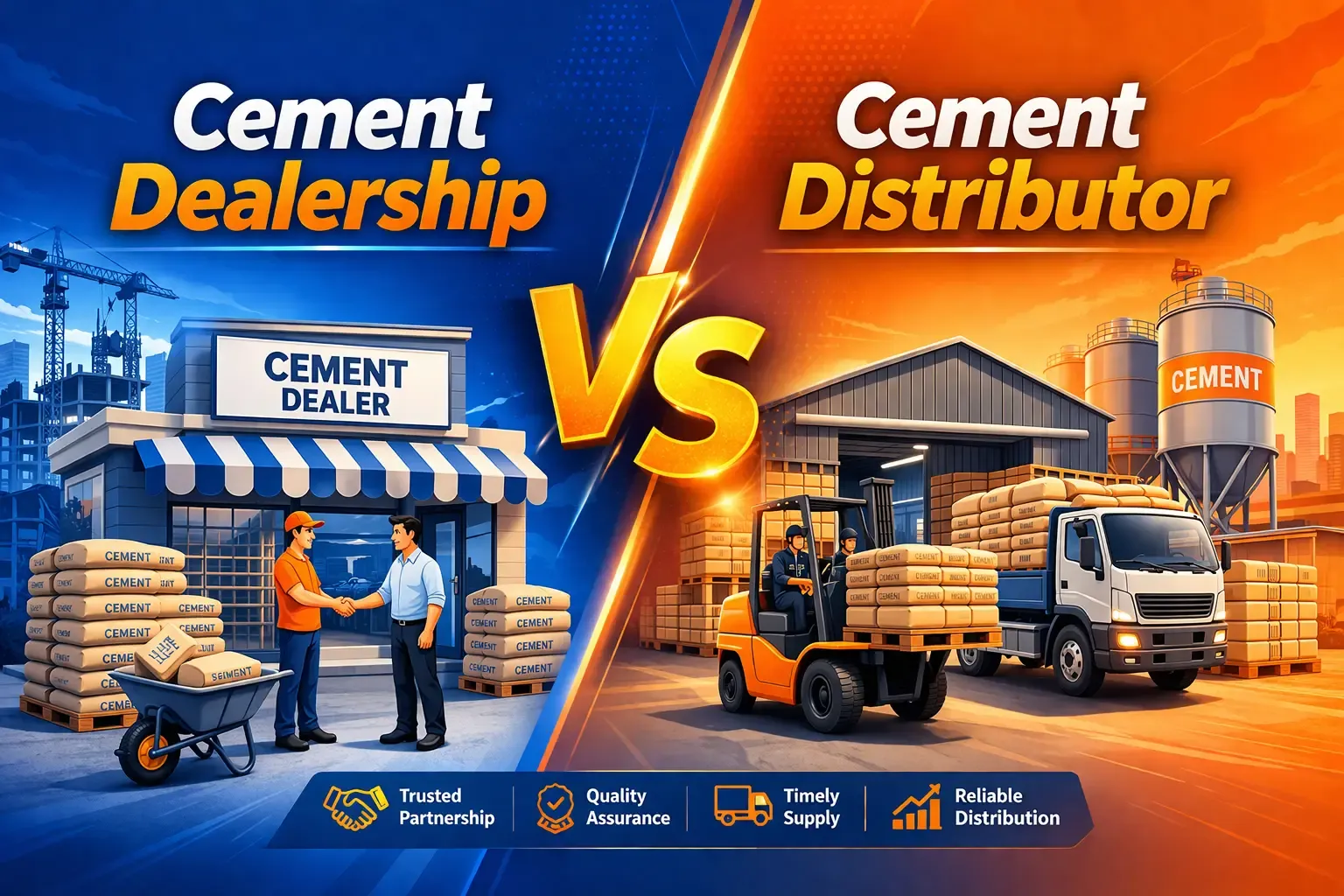
A cement dealership usually works at the local level and focuses on selling cement directly to customers.
Customers may include:
- Contractors
- Small traders
- Retailers
- Individual homeowners
Dealers usually buy cement through distributors or the company itself depending on the model of distribution of the brand used. Their primary activity is to keep stock and deliver cement to the local construction sites.
Most cement dealerships operate from:
- A warehouse
- A hardware shop
- A building material store
They are localized, and their aim is to deliver fast and concentrate on customer relationships.
In many towns and cities, when people search online for cement dealers near me, they are actually looking for these local dealerships where they can buy cement immediately.
What Is a Cement Distributor?
The scale of work of a cement distributor is greater than that of a dealer.
Key characteristics of distributors:
- Offer cement to multiple dealers within an area
- Usually do not sell directly to end users
- Receive cement in bulk from manufacturers
Cement is sent from the manufacturing company to distributors in bulk. They are supposed to move, store and distribute cement to dealerships in various towns or districts.
Indicatively, a distributor can distribute cement to 20–50 dealers in different regions.
Because of this larger operation, distributors generally require:
- Larger storage facilities
- Transportation arrangements
- Higher investment
In straightforward words, distributors bridge the gap between the cement company and the dealer network.
Variation in the Size of Operations
One of the biggest differences between a cement dealership and a distributor is the scale of operation.
Cement Dealership
Serves a local market such as a town, neighborhood, or construction zone.
Daily responsibilities include:
- Selling bags of cement
- Managing customer orders
- Maintaining stock availability
Cement Distributor
Operates on a much broader scale.
- Handles supply to multiple dealerships
- Organizes deliveries to different locations
Because of this difference:
- Distributors often handle truckloads of cement
- Dealers usually sell smaller quantities based on local demand
Investment Requirements
Another significant aspect that differentiates a dealership and a distributor is investment.
Cement Dealership Investment
Starting a cement dealership usually requires moderate investment.
Main costs include:
- Storage space or warehouse
- Initial cement stock
- Simple loading and unloading equipment
- Domestic transportation
Many small entrepreneurs start cement dealerships alongside other construction materials such as:
- Sand
- Bricks
- Steel
Cement Distributor Investment
Becoming a distributor is more capital intensive.
This is because distributors deal with bulk supply and therefore require:
- Larger warehouses
- Strong logistics systems
- Capacity to purchase cement in bulk
Manufacturers also require distributors to maintain a consistent supply to dealers within their region.
Role in the Supply Chain
Understanding the cement supply chain clearly highlights the difference.
Typical Cement Supply Chain
| Stage | Role |
|---|---|
| Cement Company | Manufactures cement |
| Distributor | Receives bulk supply and distributes to dealers |
| Dealer | Sells cement locally |
| Customer | Builder, contractor, or homeowner |
Distributors act as intermediaries between the manufacturer and the dealership network.
Dealers sell cement directly to:
- Builders
- Contractors
- Homeowners
When someone searches online for cement dealers near me, they are usually looking for the final link in this chain — the local dealer who can supply cement quickly.
Customer Interaction
Dealers and distributors also differ in the way they interact with customers.
Cement Dealership
Dealers interact directly with:
- Construction professionals
- Local buyers
They often build long-term relationships with:
- Contractors
- Builders
- Local construction teams
Dealers also help customers manage cement supply for ongoing construction projects.
Cement Distributor
Distributors usually do not interact directly with end customers.
They mainly work with:
- Cement manufacturers
- Dealer networks
Their primary focus is:
- Supply management
- Distribution logistics
Stock Management
Stock management also varies between dealerships and distributors.
Dealer Stock Management
- Inventory is based on local construction activity
- Stock levels increase during high construction seasons
- Focus on meeting local demand
Distributor Stock Management
- Handle much larger inventory volumes
- Supply cement to multiple dealerships
- Organize regular deliveries from cement plants
Because of this, distributors require:
- Larger storage spaces
- Efficient logistics planning
Business Opportunities
Both dealership and distribution offer strong business opportunities depending on available resources.
Cement Dealership Opportunity
- Easier entry for new entrepreneurs
- Requires lower investment
- Focuses on local market demand
Many successful dealers grow their business by building strong relationships with contractors and builders.
Cement Distribution Opportunity
- Suitable for businesses with larger capital and logistics capability
- Handles regional supply operations
- Ensures constant cement availability in multiple locations
Both models play a critical role in the cement industry.
Choosing the Right Option
The decision between becoming a dealer or distributor depends on:
- Investment capacity
- Infrastructure availability
- Business goals
A cement dealership is often a better starting point for small and medium businesses because it allows building a strong local customer base.
Final Thoughts
Cement distributors and dealers both play important roles in the cement supply network.
- Distributors ensure cement reaches different regions.
- Dealers supply cement directly to builders and construction projects.
Understanding the difference between these two roles helps entrepreneurs choose the right business model.
Whether you plan to start a cement dealership or explore distribution opportunities, focusing on:
- Reliable supply
- Proper storage
- Strong customer relationships
is essential for long-term success in the cement business.
FAQs
FAQ 1: What is the main difference between a cement dealer and a distributor?
A cement distributor usually handles large volumes and supplies cement to multiple dealers in a region, while a dealer sells cement directly to contractors, builders, and home owners. Distributors require higher investment and logistics capability. Dealers operate at the local market level. Amrit Cement works with both distributors and dealers to ensure efficient supply and product availability in growing construction markets.
FAQ 2: Which business model requires higher investment: dealership or distributorship?
Distributorship generally requires higher investment because distributors manage bulk inventory, transportation, and supply to multiple dealers. Dealerships require relatively lower investment and focus on retail sales. With Amrit Cement, dealers can start with moderate capital and gradually expand their business depending on market demand.
FAQ 3: Which role has more responsibility in the supply chain?
Distributors manage regional supply, warehouse operations, and dealer networks. Dealers focus on local sales, contractor relationships, and customer service. Both roles are important for ensuring cement reaches construction sites on time. Amrit Cement supports both partners with logistics coordination, product supply, and market support.
FAQ 4: Which option is better for someone entering the cement business?
For most entrepreneurs, starting as a dealer is easier because it requires lower investment and smaller storage space. As the business grows, they can expand into a distributorship. Amrit Cement helps new dealers build a strong foundation by providing brand support, consistent supply, and market guidance.
FAQ 5: How does partnering with a strong brand help dealers and distributors?
Working with a trusted brand like Amrit Cement increases customer confidence. Contractors prefer reliable cement brands, making sales easier for dealers and distributors. Strong brand recognition also helps build long-term business relationships and consistent market demand.