Most Construction Mistakes Happen While the Work Is Still Being Done
A little extra water goes into the concrete.
Cement bags stay too close to a damp wall.
Workers rush compaction because the next concrete batch has arrived.
Curing stops earlier than planned.
At that moment, none of these may look like a major problem. But small mistakes during construction can later appear as cracks, honeycombing, seepage, weak plaster or durability problems.
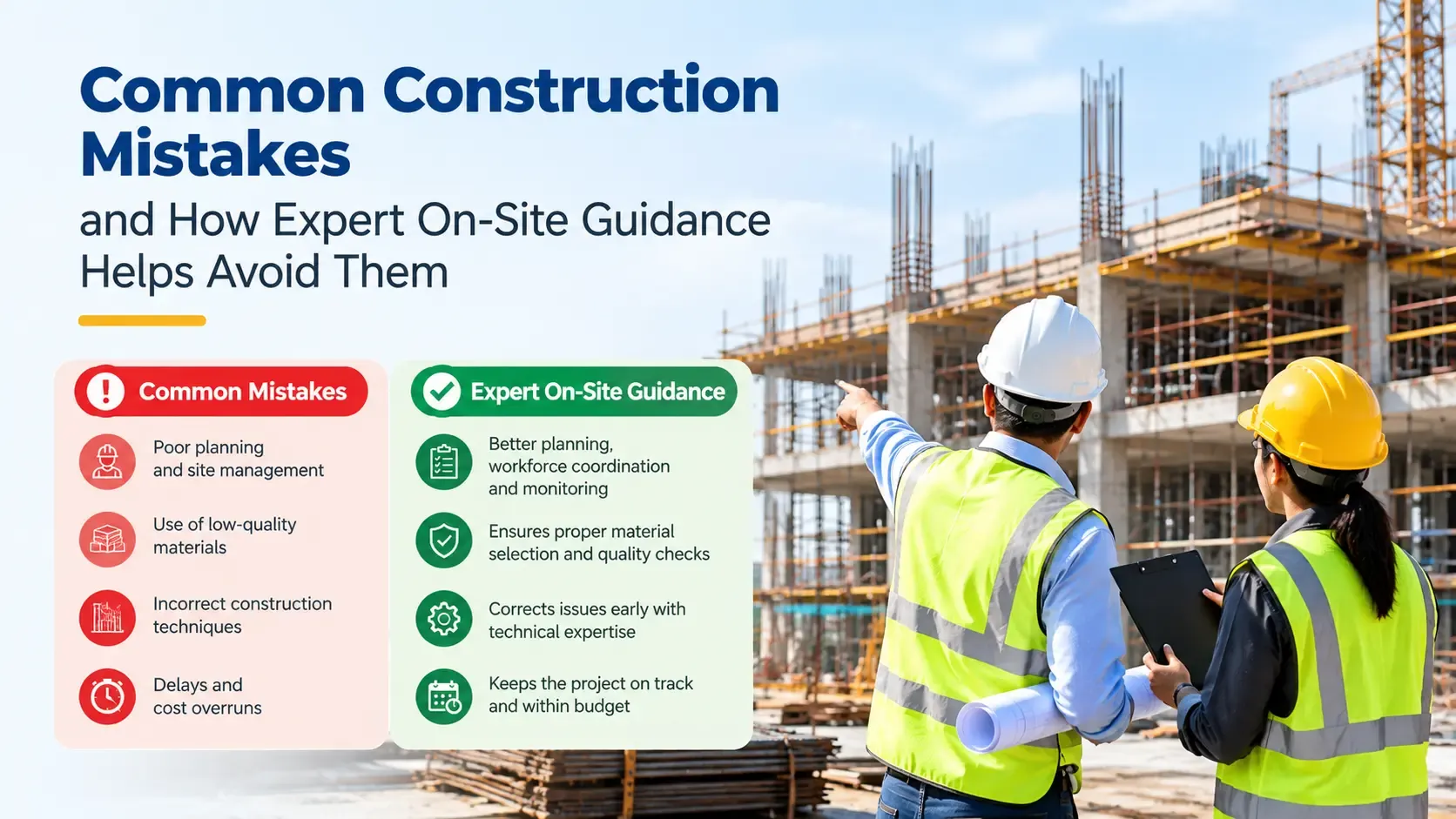
This is why quality checks should happen while construction is in progress. Knowing the most Common Construction Mistakes and using expert site guidance can help teams correct problems before they become part of the building.
1. Adding Too Much Water to Concrete
Workers sometimes add extra water because it makes concrete easier to mix, place or spread. But concrete needs a controlled water-cement ratio.
Too much water can increase porosity and reduce the strength and durability of hardened concrete. This is one of the most important cement mixing mistakes to avoid.
How site guidance helps
Technical teams can guide workers on the correct water quantity and explain why they should not change it simply to improve workability.
During monsoon construction, they can also remind teams to consider the moisture already present in wet sand and aggregates.
2. Using Incorrect Material Proportions
Adding cement, sand and aggregates approximately by eye can create inconsistent batches.
One batch may contain too much sand. Another may contain additional water. Another may have a different cement proportion.
The result is inconsistent concrete or mortar quality.
How site guidance helps
A site support service can encourage proper batching and measurement methods. For structural concrete, teams should follow the approved mix design and project specification.
Consistency matters.
The last batch should not be significantly different from the first one.
3. Mixing Concrete for Too Little Time
Correct quantities alone do not guarantee a good mix. Concrete needs proper mixing so that cement, water and aggregates distribute evenly.
Rushing the process can produce an inconsistent mixture. The same problem can occur with masonry and plaster mortar.
How site guidance helps
Technical support can help workers follow better mixing practices and check whether the mixing equipment and process suit the work being carried out.
Good concrete should be mixed properly before it reaches the formwork.
4. Poor Concrete Compaction
Concrete can trap air during placement.
If workers do not compact it properly, voids and honeycombing may develop, particularly around reinforcement and congested areas.
These defects can affect concrete quality and create easier paths for moisture to enter.
However, excessive vibration is not the answer either. It can contribute to segregation when concrete is improperly handled.
How site guidance helps
On-site experts can guide workers on correct placement and vibration practices and identify visible signs of poor compaction before the work progresses further.
5. Stopping Curing Too Early
Concrete may look hard within a short time.
That does not mean hydration has finished.
Cement needs suitable moisture conditions to continue developing the required properties. Inadequate curing can contribute to surface cracking and poor durability.
How site guidance helps
Technical teams can explain when curing should begin, which method suits the work and how long the specified curing should continue.
They can also correct a common monsoon misconception: rainfall alone should not replace a proper curing plan.
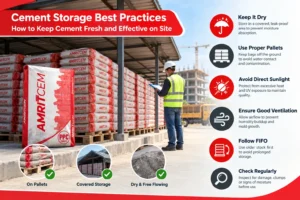
6. Storing Cement Incorrectly
You can choose quality cement and still lose some of its performance before mixing if you store it badly.
Cement readily absorbs moisture.
Keeping bags directly on the floor, close to damp walls or under a leaking cover increases the risk of moisture exposure and lump formation.
How site guidance helps
A site support service can help the team check basic cement storage practices.
Cement should stay in a dry, covered area, above floor level and protected from rain and moisture until workers use it.
7. Ignoring Sand and Aggregate Quality
Cement receives a lot of attention.
Sand and aggregates sometimes receive much less.
Dirty aggregates, excessive silt or clay in sand, poor grading and unsuitable materials can affect concrete and mortar performance.
How site guidance helps
Technical teams can help site staff understand basic material-quality checks and recommend testing when required.
Concrete is a combination of materials.
The quality of one ingredient cannot compensate for poor quality in another.
8. Adding Water Again to a Mix That Has Started Losing Workability
A concrete or mortar mix begins to stiffen.
Someone adds more water.
It becomes easier to use again.
Problem solved?
Not necessarily.
Adding uncontrolled water later can change the intended proportions and affect final performance.
This is another of the cement mixing mistakes that often comes from trying to solve a site problem quickly.
How site guidance helps
Expert guidance can help teams understand why a mix is losing workability and follow the approved procedure rather than automatically adding more water.
9. Removing Formwork Too Early
Construction schedules create pressure. The faster formwork comes off, the faster the next stage can begin.
But concrete needs enough strength before formwork or structural supports are removed. Removing them too early can damage edges, surfaces or, more seriously, affect structural safety.
How site guidance helps
Formwork removal should follow the project specification and responsible engineer’s instructions. Site teams can help reinforce these requirements and prevent schedule pressure from becoming a quality shortcut.
10. Ignoring Small Defects Before the Next Stage
Honeycombing appears.
A crack develops.
Plaster sounds hollow.
Water collects where it should drain.
The easiest response is sometimes to cover the problem and continue. That turns a visible problem into a hidden one.
How site guidance helps
Early inspection allows the responsible team to assess defects before plaster, tiles, paint or other finishes hide them.
Not every crack means structural failure.
Not every defect needs the same repair.
The important step is to identify the cause before choosing the solution.
Expert Guidance Helps Prevent, Not Just Correct
This is where technical support adds real value. The best time to identify a construction error to avoid is before workers make it. Expert guidance can help with:
Construction Stage
What Technical Guidance Can Check
Material storage
Cement protection and stock condition
Batching
Correct proportions and water control
Mixing
Consistency and proper procedure
Concrete placement
Handling and placement practices
Compaction
Proper vibration
Curing
Method and continuity
Masonry/plaster
Mix and application practices
General site work
Visible quality issues and good practices
This does not mean a technical support team replaces the project’s structural engineer, architect or site engineer.
Structural design and engineering decisions should remain with qualified project professionals.
Site support adds another layer of practical guidance during execution.
How Amrit Cement’s Site Support Can Help
Selecting quality cement is important.
Using it correctly is equally important.
Amrit Cement’s technical support can help homeowners, contractors and site teams understand recommended cement applications and construction practices.
This may include guidance related to cement use, concrete and mortar preparation, water control, storage, compaction and curing, depending on the support available for the project.
Such a site support service helps connect the cement inside the bag with the way workers actually use it on site.
Because even good cement cannot correct an incorrect mix, excess water or poor curing by itself.
Quality Is Built Before It Is Inspected
Many Common Construction Mistakes are preventable. Like:
- Measure materials instead of guessing.
- Control water instead of adding it for convenience.
- Compact concrete properly.
- Cure it for the required period.
- Protect cement from moisture.
- Check defects before covering them.
And ask for technical guidance when something is unclear. A quality inspection at the end can tell you what went wrong. Good site practices help prevent it from going wrong in the first place.
That is the real value of expert on-site guidance.
It helps quality become part of the construction process, rather than something you check only after the building is complete.
Frequently Asked Questions
1. What are the most common construction mistakes?
Some Common Construction Mistakes include adding excess water to concrete, incorrect batching, poor compaction, inadequate curing, improper cement storage and ignoring defects before finishing work begins.
2. What are the most common cement mixing mistakes?
Common cement mixing mistakes include incorrect proportions, adding too much water, inconsistent batching, insufficient mixing and adding uncontrolled water after the mix starts losing workability.
3. How does a site support service improve construction quality?
A site support service can guide workers and contractors on material storage, batching, mixing, concrete placement, compaction, curing and other practical construction processes.
4. Can technical site support replace a structural engineer?
No. Technical site support should complement, not replace, qualified structural engineers, architects and project professionals.
5. When should homeowners ask for technical site guidance?
Technical guidance is particularly useful before or during important activities such as concrete pouring, cement selection, mixing, curing and when the site team is unsure about the correct application of a material.