Most comparisons of OPC vs PPC cement stop at “early strength vs durability.”
But that’s not how real construction decisions are made on site.
For an Individual Home Builder (IHB), the better question is:
Which cement reduces your long-term risk — not just your construction time?
Let’s look at the practical realities that actually influence your home’s performance.
The Real Question Is Not OPC vs PPC
It’s Speed vs Stability
When contractors push for OPC, the hidden reason is usually speed. Faster strength gain means:
- Early shuttering removal
- Faster slab cycles
- Quicker billing milestones
- Less idle labour cost
But here’s what many IHBs miss:
Speed benefits the contractor more than the homeowner.
PPC, on the other hand, rewards patience. Its slower hydration creates a denser concrete matrix, which improves:
- Micro-crack resistance
- Long-term moisture resistance
- Surface finish stability
- Reduced seepage risk
If your house is meant to last 30–40 years, stability matters more than 5 days of saved construction time.
Heat Generation: The Silent Structural Factor
Cement doesn’t just “set.” It generates heat while hydrating.
OPC produces higher heat of hydration. In large pours (like slabs and footings), this internal heat can:
- Increase shrinkage stress
- Cause micro cracking
- Affect long-term durability if curing is poor
PPC 43 grade cement generates lower heat. This makes it more suitable for:
- Mass concreting
- Foundations
- Hot climate construction
- Areas with high day–night temperature variation
For IHBs building in warm or humid regions, this difference is more important than grade numbers.
The Curing Discipline Reality
On paper, OPC performs extremely well.
On site, curing discipline is rarely perfect.
OPC demands strict curing because:
- It loses moisture quickly
- It gains strength fast
- Improper curing increases cracking risk
PPC is more forgiving. Its slower strength gain reduces early shrinkage stress.
If you cannot monitor curing daily, PPC gives you a margin of safety.
Plaster Performance: Where Many Homes Fail
Many surface cracks in homes do not originate in RCC. They begin in plaster layers.
PPC generally provides:
- Better workability
- Improved bonding with bricks
- Smoother plaster finish
- Reduced surface cracks
If your priority is long-term wall stability and aesthetics, PPC has an advantage in masonry and plastering works.
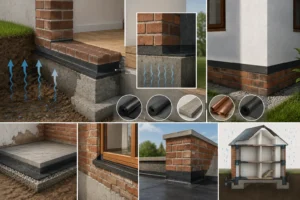
Long-Term Seepage Resistance
Seepage repair is one of the most expensive post-construction issues.
PPC’s pozzolanic reaction fills microscopic pores inside concrete over time. PPC cement grade reduces permeability and improves resistance to:
- Rainwater penetration
- Damp walls
- Foundation moisture
- Sulphate attack
In high rainfall zones or regions with waterlogged soil, this becomes a decisive factor.
Financial Thinking Beyond Cement Price
Many IHBs compare only bag price.
But cement choice affects:
- Crack repair frequency
- Waterproofing cost
- Replastering cycles
- Maintenance budget after 5–10 years
If PPC reduces even one major repair cycle, the lifetime savings can exceed the initial price difference.
The smarter metric is not price per bag — it is cost per decade.
Where OPC Still Makes Strong Sense
OPC remains highly effective when:
- Early load-bearing is required
- Tight construction schedules exist
- Cold weather slows hydration
- High-grade RCC structural work is prioritised
For beams, columns, and slabs under timeline pressure, OPC can be justified.
The Balanced Strategy Most Engineers Prefer
Instead of treating opc vs ppc cement as a battle, experienced site engineers often use a mixed strategy:
- OPC for structural RCC elements where early strength is critical
- PPC for masonry, plaster, foundations, and general concrete work
This approach balances speed, durability, and surface performance.
Regional Conditions Matter More Than Brand
In high-moisture regions such as the Northeast, humidity and rainfall influence cement performance significantly.
In such conditions:
- Lower heat cement
- Higher density concrete
- Better moisture resistance
become more important than early compressive strength.
Before choosing cement type, assess:
- Soil condition
- Groundwater presence
- Climate pattern
- Project timeline
Cement should match site reality — not just contractor preference.
A Practical IHB Decision Framework
Ask these five questions before choosing:
- Is my construction timeline tight?
- Can I ensure strict curing supervision?
- Is my site exposed to high moisture or heavy rainfall?
- Am I prioritising long-term durability over short-term speed?
- What is the real 10-year maintenance outlook?
If most answers favour durability and risk reduction, PPC is typically safer.
If speed and early strength dominate your priorities, OPC becomes logical.
Final Perspective
OPC vs PPC cement is not about which cement is stronger on day 7.
It is about which cement aligns with:
- Your construction management style
- Your climate conditions
- Your supervision capability
- Your long-term ownership mindset
For most individual home builders focused on durability and reduced future repair costs, PPC often provides a practical advantage.
For timeline-driven structural execution, OPC remains relevant.
The best decision is not emotional, not brand-driven, and not contractor-driven.
It is a risk-adjusted decision based on how you want your home to perform over decades.
FAQ 1: As a home owner, how do I decide between OPC and PPC?
If you want faster construction and early strength, OPC is a good choice. If you prefer long-term durability and reduced cracks, PPC is better. For residential homes, many builders prefer PPC for its smoother finish and durability. Amrit Cement offers both OPC and PPC, helping you choose based on your construction stage and structural needs.
FAQ 2: Why do contractors use OPC for structural work?
Contractors prefer OPC for columns, beams, and slabs because it gains strength quickly. This allows faster shuttering removal and quicker project progress. Amrit Cement OPC provides consistent strength and reliable bonding with steel, making it suitable for RCC work where timelines matter.
FAQ 3: Is PPC more economical for long-term construction?
Yes, PPC often reduces long-term maintenance costs because it improves durability and reduces cracking. It performs well in plastering and masonry work. Amrit Cement PPC offers strong resistance to moisture and better finish quality, making it cost-effective over the building’s lifespan.
FAQ 4: Does choosing the wrong cement affect project cost?
Absolutely. Using OPC where PPC is more suitable—or vice versa—can cause cracks, delays, or rework. Amrit Cement helps contractors and home owners select the right cement type to avoid performance issues and unnecessary expenses.
FAQ 5: Can I use both OPC and PPC in the same project?
Yes. Many contractors use OPC for structural work and PPC for plastering and brickwork. Amrit Cement provides both types to ensure every stage of construction gets the right strength and durability.