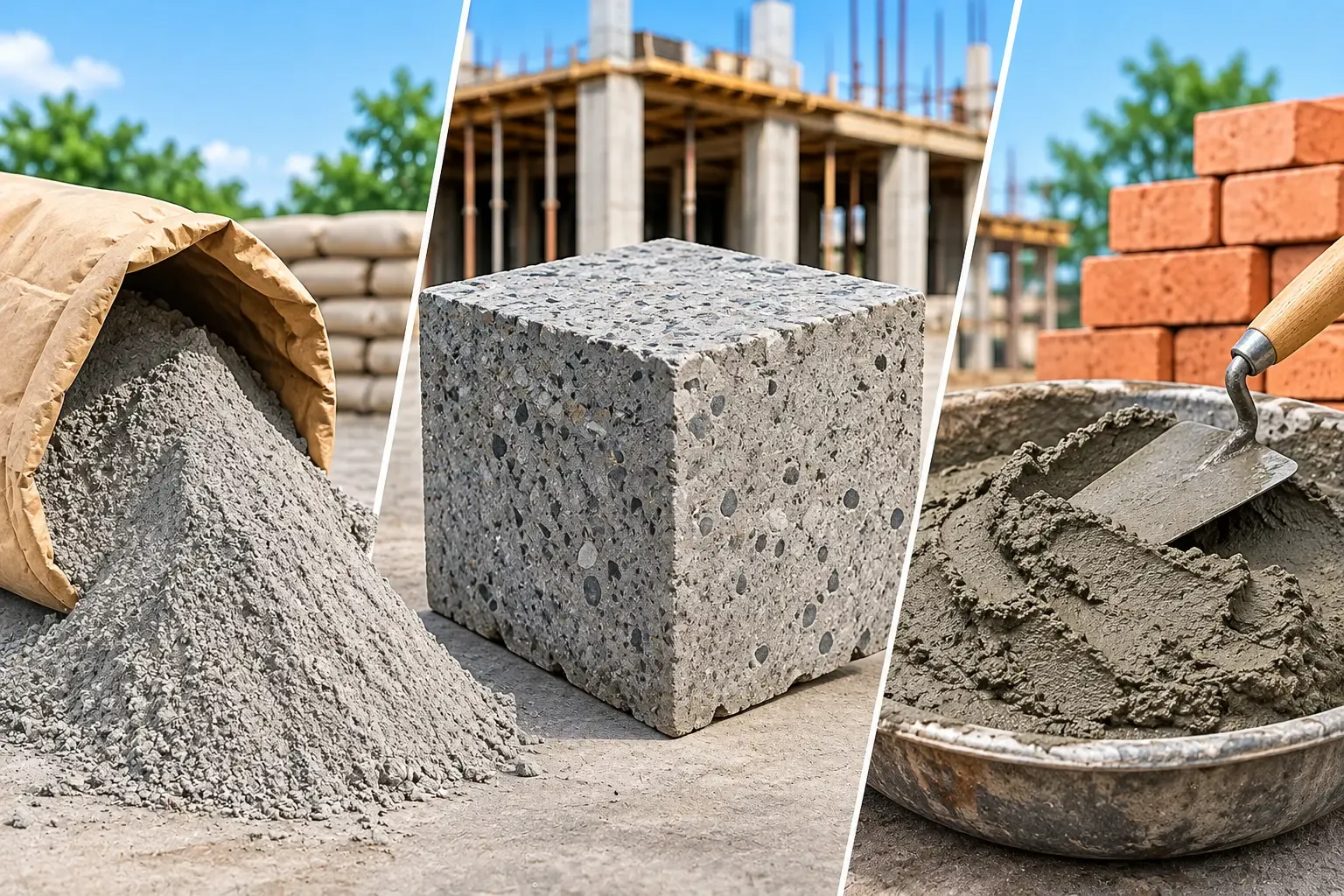
Cement vs Concrete vs Mortar: Differences, Uses and Applications
Ask for cement at a building-material shop and you will get a bag of powder. Ask a contractor to cast a slab and the team will prepare concrete. Ask a mason to build a brick wall and the material between the bricks is usually mortar.
The words are often used as if they mean the same thing. They do not.
Understanding cement vs concrete vs mortar helps homeowners order the right materials, ask better questions and avoid confusion during construction. The difference is easy to remember once you know what each material does.
Cement: the binding ingredient
Cement is a fine powder that reacts with water and forms binding compounds. In building construction, it is commonly used as part of concrete, mortar, plaster and other cement-based products.
Cement is not normally poured alone to make a roof slab. A slab needs concrete designed with suitable aggregates, water and cementitious materials, plus reinforcement where specified.
Amrit Cement supplies Ordinary Portland Cement (OPC) and Portland Pozzolana Cement (PPC). OPC is available in grades such as 43 and 53 under the relevant product standards. PPC has its own product specification and should not be described as ‘PPC 53 grade’ in the same sense as OPC 53.
The right product depends on the application and project requirements.
Concrete: cement plus aggregates and water
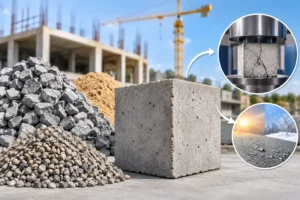
Concrete is made by combining cementitious materials, water, sand and coarse aggregates such as crushed stone or gravel. Admixtures may also be included when required by the approved mix.
Cement paste binds the aggregates together as the mixture hardens. The aggregates give concrete much of its volume and influence workability, strength, stability and durability.
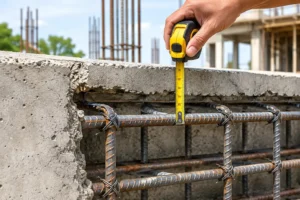
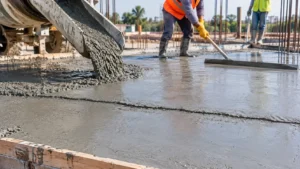
Concrete is used in foundations, columns, beams, slabs, stairs, pavements and many other parts of a building. Where steel reinforcement is added according to a structural design, the result is reinforced cement concrete, or RCC.
Concrete strength depends on the whole mix and construction process. A higher OPC grade number does not automatically mean that the finished concrete will have the correct strength.
Mortar: the material that joins bricks and blocks
Mortar is commonly made using a suitable binder, sand and water. Cement mortar is widely used for brickwork, blockwork, masonry joints and some plastering applications.
Unlike ordinary structural concrete, traditional masonry mortar generally does not contain large coarse aggregate. It needs workability so masons can spread it and form consistent joints.
The mix should suit the masonry units and the project specification. A mortar that is too stiff can be difficult to place. Too much water can also affect performance. Making the mix stronger than necessary is not automatically better for every type of brick or block.
For plastering, the surface preparation, sand grading, proportions and curing also matter.
The easiest way to remember the difference
Cement is an ingredient. Concrete is a construction material made from cementitious paste and aggregates. Mortar is used mainly to bond masonry units or form suitable finishing layers.
A bag of cement can be used to prepare both concrete and cement mortar. But the quantities, other ingredients, intended strength and method of application are different.
This is why a contractor must not use one informal ‘site mix’ for everything from foundations to plastering.
Where each is used during house construction
Foundation
Foundation: structural concrete or plain cement concrete may be required, depending on the design. The mix should follow the engineer’s specification.
Columns, beams and slabs
Columns, beams and slabs: RCC is commonly used. Reinforcement placement, concrete mix design, compaction and curing are all essential.
Brick or block walls
Brick or block walls: a suitable masonry mortar helps join the units and form consistent joints.
Plaster
Plaster: an appropriate mortar or plastering system creates the required surface finish. Good sand and curing can be as important as cement selection.
Floor screed
Floor screed: a specified cement-sand or proprietary screed may create levels and slopes before the final flooring is installed.
Each stage asks the material to do a different job. The name of the cement bag is only one part of that decision.
What about OPC and PPC?
OPC and PPC are both cement products, not separate substitutes for concrete or mortar. Either may be specified in suitable applications.
OPC is often selected where particular early-strength requirements apply. PPC contains pozzolanic material such as fly ash and generally develops strength differently, with useful long-term durability characteristics when correctly used.
AmritCem PPC can be considered for masonry, plastering and other applications where PPC meets the project specification. For structural work, the engineer must approve the cement and concrete mix.
Do not choose cement solely from a claim that one grade is ‘strongest’. Ask which product suits the intended job.
Why mixing water matters in all three
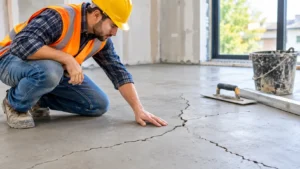
Water makes cement hydration possible. But extra water added for convenience can change the strength and quality of concrete or mortar.
A very wet concrete mix may be easier to pour but can increase porosity and reduce performance. A watery masonry mortar may lose the intended consistency and bond quality.
During the monsoon, wet sand already contains water. Contractors should account for this rather than using the same additional water every day.
Always use suitable mixing water and follow the approved mix or manufacturer instructions.
The cost mistake homeowners often make
A homeowner may compare only the price of cement bags and ignore sand, aggregates, batching and workmanship. But concrete cost includes all of these, along with placing, compaction, testing and curing.
Likewise, mortar quality depends on more than cement quantity. Poor sand, incorrect proportions or a dry masonry surface can create problems even when the cement is a recognised brand.
Buying extra cement is not a substitute for proper mix design. The better question is whether each material is being used in the correct amount for its job.
Storage and handling are different too
Cement bags need dry, raised storage to prevent moisture damage before use. Sand and aggregates should be kept clean and protected from mud and unwanted mixing with soil.
Fresh concrete and mortar have limited working time. Once materials begin to set, workers should not add water and remix them without an approved procedure.
After placement, concrete and suitable cement-based mortar need proper curing. The required method and duration depend on the application and specification.
How Amrit Support can help
Amrit Cement’s technical support programme includes raw-material guidance, site demonstrations, slump testing and concrete testing services. That is useful because the right cement must be combined with suitable aggregates, water and workmanship.
For a homeowner, the most useful discussion is not simply ‘Which bag should I buy?’ It is ‘What mix does this stage require, and how will the team use it correctly?’
FAQs
Is cement the same as concrete?
No. Cement is a binding ingredient. Concrete combines cementitious material, water, sand and coarse aggregates.
Does mortar contain stone chips?
Traditional cement masonry mortar generally uses sand rather than the coarse aggregate found in ordinary structural concrete.
Can PPC be used for plastering?
Yes. AmritCem PPC may be considered for suitable plastering and masonry applications where the specification permits it.
Is OPC 53 concrete stronger than OPC 43 concrete?
Not automatically. OPC grade refers to cement testing requirements. Finished concrete strength depends on the entire designed mix and workmanship.
Can the same cement bag be used for every stage?
One product may suit several applications, but each stage needs the correct mix proportions and should follow the project specification.