
A local dealer in Jorhat shared with us a story of a customer who insisted on throwing in an extra bag of cement into every batch of concrete – “you can never have too much cement” was his way of thinking. His idea was more cement, stronger house , but what he got was a house whose surface cracked within weeks. The reason? Nobody could work out why the cement,sand, aggregate and water ratio had gone haywire – no on site even knew what was going on.
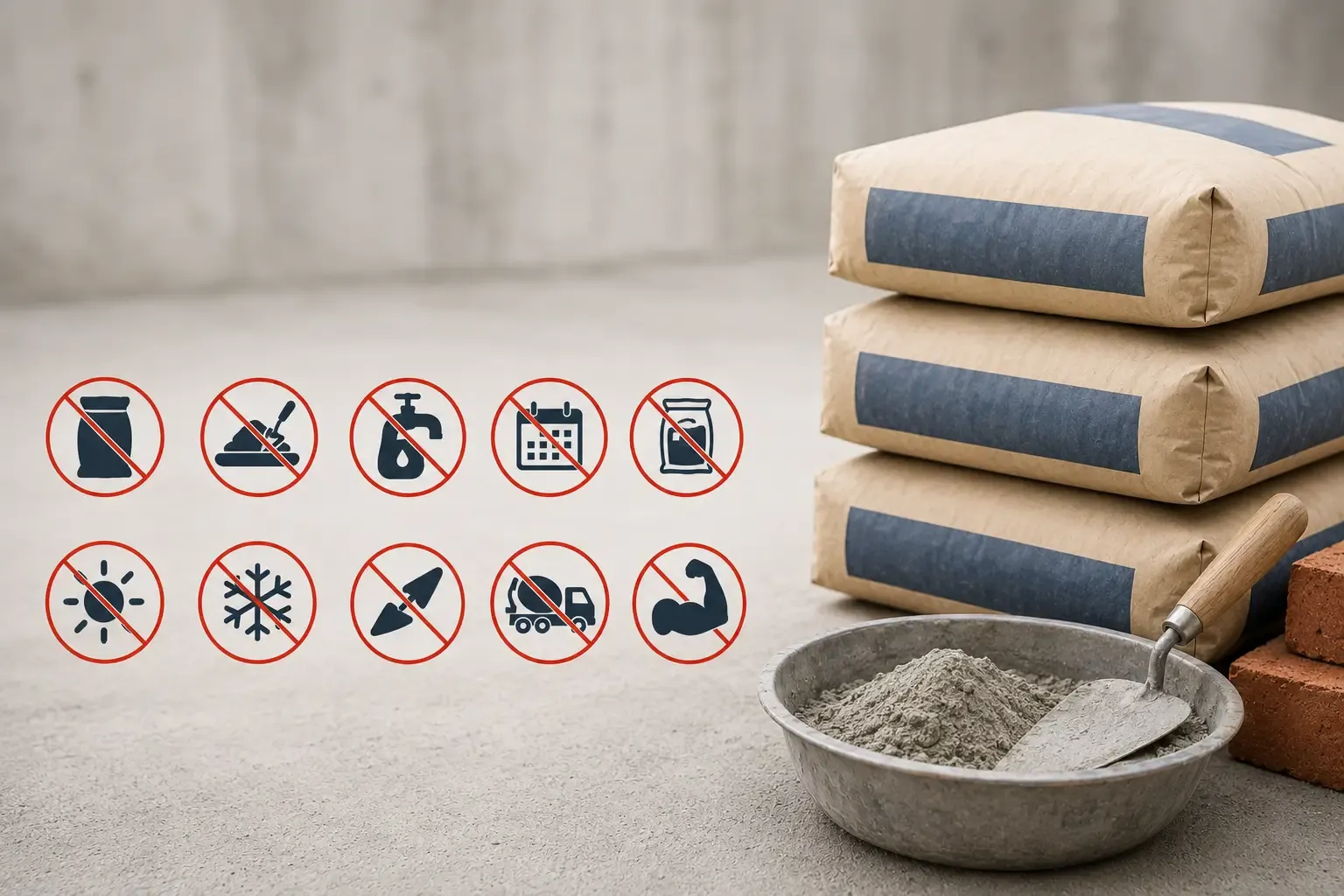
But this sort of cement myth in India isn’t usually down to people trying to be naughty , its usually just a case of “well my dad’s builder mate told me that” or a neighbour who works as a contractor or some dodgy WhatsApp message that sounds plausible but has no actual basis in fact. This post will run through the top 10 myths we always hear and what the actual engineering data says instead.
Homeowners Make Cement Decisions Based on Word of Mouth
For most families , a home is only built once or twice in a lifetime – There’s very little experience to draw on , so decisions about cement – just how much to get , which brand to choose , how to store it , and what ratio to mix – tend to be based on whatever the mason happens to recommend, or whatever you just kind of know. But the trouble is that in construction, folks ‘ wisdom & structural engineering dont see eye to eye very often & the homeowner usually finds out which one is right years later when a hairline crack appears or a wall suddenly starts leaking.
Why These Myths Actually Cost Money and Safety
This isn’t a small inconvenience. Get the cement decision wrong, and the consequences show up as reduced structural life, visible cracking, water seepage, or in the worst cases, compromised load-bearing capacity. Concrete strength is a function of precise ratios and controlled conditions — not intuition — and every myth on this list represents a place where intuition overrides the actual chemistry and physics involved. A structure built on five or six of these misconceptions at once is a structure that’s quietly underperforming its design life, often without anyone realizing it until a repair bill arrives.
10 Myths, Busted With Facts
Myth 1: “If we just add more cement, the structure will be stronger”
This is the myth most people believe in, and it’s pretty easy to see why. However, the reality is a bit more complicated. Concrete strength is all about getting the right balance of cement, sand, aggregate and water – not just throwing in a bunch of extra cement. Adding way too much cement beyond what your design mix calls for can actually cause more problems than it fixes. For one thing, it increases the paste content in the mix, which causes it to shrink more during the curing process and can lead to more surface cracking.
Fact: A properly designed M20 mix (which is roughly a 1:1.5:3 ratio) will nearly always outperform some “extra cement” mix that uses the same aggregate and water because it keeps the water-cement ratio intact. The ratio is what matters here, not just how much of each material you use.
Myth 2: “The most expensive cement is always the best”
When people say the most expensive cement is the best, they’re probably forgetting that some of the cost difference just goes to marketing and packaging. In reality, all that really matters is whether or not the cement meets the standard for its grade (IS 269 for OPC, IS 1489 for PPC, IS 455 for PSC) and if it’s fresh and stored properly.
Fact: Two cements of the same grade (say, both OPC 43 grade) will give you the same design strength when you use them right, regardless of the price difference between them.
Myth 3: “All cements are basically the same so brand doesn’t matter”
This myth is kind of the opposite of the first, and it’s no less wrong. While two cements that meet the same standard will meet the minimum requirements, all sorts of other factors can vary between manufacturers – like consistency between batches, quality control, how fine the grinding is, and how fresh it is by the time it gets to the site. Consistency is really the thing that sets the good cement apart from the mediocre one.
Fact: BIS certification is what gets you the floor you need, but manufacturing consistency is what really shows you the difference between brands.
Myth 4: “Rain after casting counts as curing”
We covered this already in our post on monsoon roof casting but it’s a myth that’s still really prevalent. Curing isn’t just about getting a little bit of rain on the site – it’s about keeping the concrete moist for a good long while (min. 7 days for OPC concrete, up to 10-14 days for blended cements). Anything less is just not going to cut it.
Fact: Concrete typically reaches around 70% of its 28-day design strength by day 7 and continues gaining strength through day 28 and beyond, but only if moisture is maintained consistently through that window.
Myth 5: “Cement doesn’t expire, so old stock is fine to use”
Cement is actually pretty good at sucking up water from the air over time – even if it’s in a sealed bag – and this reaction starts a slow process of hydration that reduces the cement’s overall strength. Most people recommend just using cement within 3 months of it being made for the best results.
Fact: Cement stored for 3 months can lose roughly 20% of its strength-giving capacity under normal storage conditions, and considerably more in high-humidity regions like Northeast India if storage isn’t controlled.
Myth 6: Adding extra water is a good idea, and it won’t harm the strength of your mix
This is related to Abrams’ Law – a fundamental rule in concrete tech: for a given set of materials, the strength of the concrete is the inverse of the water to cement ratio. It’s true that more water makes the mix a heck of a lot easier to work with, but here’s the thing: it also directly reduces the final strength by increasing porosity as the excess water evaporates and leaves holes behind.
Fact: If you increase the water to cement ratio from 0.45 to 0.60, your 28-day compressive strength can end up being 25-30% lower, even though the mix looks and pours fine on site.
Myth 7: You can judge the quality of cement by its colour
Now, cement colour is influenced by the raw materials and how it’s made, particularly by iron oxide and other minerals – but not by how strong it is or how good it is. If you see a slightly darker or lighter shade of grey, that tells you almost nothing about the compressive strength or how well it sets.
Fact: Two different cement samples that look like they’re totally different in colour can both meet the same IS spec – so, colour isn’t a good guide to performance.
Myth 8: Any cement is good for any part of the house
When it comes to the different jobs you do with concrete – plastering, flooring, foundations and roof slabs all put different demands on the cement, like how easy it is to work with, how long it takes to set, how resistant it is to water and heat. Using the same cement for everything without considering these differences is a super common mistake. Blended cements like PPC are great for humid, high-moisture jobs, while you’ll need specific grades for jobs that need to dry fast or for mass concreting.
Fact: If you use the wrong cement type for the job, it won’t usually cause any immediate problems – it’s just that you won’t notice it’s gone wrong until later, years down the line, when the concrete starts to show signs of wear and tear.
Myth 9: Concrete is ready to take on loads within a day or two
The initial set for cement usually takes 30 minutes, but final set is around 10 hours – but just because it’s set doesn’t mean it’s ready to handle loads. Structural parts like slabs and beams need to get up to a certain percentage of their design strength, and that’s usually determined by how long they’ve been curing and by testing the cubes – before you can remove the formwork or put loads on the structure.
Fact: IS 456:2000 has minimum guidelines for how long you should leave formwork in place before removing it, and that’s usually at least 7 days for slab soffits, and much longer for beams and cantilevers – because just because it looks solid doesn’t mean it’s ready for the load.
Myth 10: Local, unbranded cement is the same as the branded stuff sold cheaper
A lot of the time it genuinely is comparable, but without anyone checking the quality, testing it and making sure it meets the necessary standards, there’s no way to be sure if it’s really up to scratch. The problem isn’t that the unbranded stuff is always rubbish – it’s just that you can’t be sure, batch to batch.
Fact: BIS certification (the ISI mark) requires regular factory audits and product testing — checking for a valid, current certification is one of the few objective ways a homeowner can verify what’s actually going into their walls.
A Quick Example From the Field
A local builder in Nagaon recently shared with me a case that really illustrates just how badly following ‘concrete wisdom’ can go wrong . Two houses had been built on the same street, roughly at the same time. One of the homeowners had stuck to what they thought they should be doing – mixing the cement right , using the cement before its sell by date and making sure the concrete had a good 7 days to cure with plenty of water to keep it all nice and moist.
The other homeowner took a different approach, relying on the word of an experienced but not necessarily well trained builder who had given them some dodgy advice – “add extra cement for extra strength” and “skip the curing if it doesn’t rain” – and to top it all off they happened to have some cement that had been sitting in the storage for months. By the time the first monsoon season came round the second house was showing some pretty worrying signs – hairline cracks on the roof and damp patches inside – while the first house looked like it was still in pristine condition. Both houses were built in exactly the same place, with the same weather patterns and the same contractors available – so what was the difference ? The answer is quite simple – one house had followed the myths and the other hadn’t.
The Takeaway
When it comes to cement its all about finding the right type for the job , not trying to save a few bucks or picking a brand thats fancy – its about following the right mix ratios and giving the concrete the time and the water it needs to get to its full strength. Most of the myths we all think of as ‘obvious’ only seem like common sense because we’ve heard them so many times. The reality is that the science and the sorry state of lots of houses that owners wish they had followed it tell a very different story.
At Amrit Cement, our dealers and technical team are available to walk homeowners through the right grade, quantity, and curing schedule for their specific project — because getting these fundamentals right at the start is far cheaper than fixing them later. Roof to Foundation Dhalai starts with getting the basics right.
Have questions about which cement grade suits your project? Talk to your nearest Amrit Cement dealer before you place your order.