
Concrete Bleeding: Causes, Warning Signs and Prevention at Construction Sites
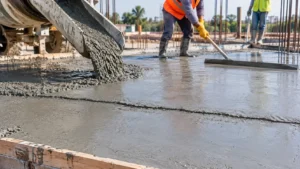
The slab has just been poured. Workers begin spreading and levelling the concrete. A little later, shiny water appears on the surface. Someone reaches for the trowel and starts pressing it back in.
That is a moment worth stopping.
The water may be the result of concrete bleeding. Some bleeding can occur naturally in fresh concrete, but excessive bleeding or finishing too early can damage the surface. Understanding concrete bleeding causes helps workers know when to wait, when to report a problem and what to change before the next pour.
What is bleeding in concrete?
Fresh concrete contains water, cement, sand and coarse aggregates. After placement, the heavier solid particles tend to settle. Some mixing water can rise towards the surface or collect under aggregate particles and reinforcement.
That upward movement is called bleeding. It is not the same as rainwater falling onto the concrete, although the two can be confused on an exposed site.
A light amount of bleeding does not automatically mean the batch is defective. The concern grows when water forms large patches, carries fine particles upwards, or continues after the surface should be ready for finishing.
Why does concrete bleed too much?
Too much mixing water.
Workers sometimes add water to make concrete easier to place. But excess water may increase bleeding and can reduce strength and durability if it changes the approved mix.
Poorly proportioned ingredients.
A mix that lacks enough suitable fine material or has an unsuitable grading may not hold water evenly. Concrete can separate more easily when its ingredients do not work together.
Changes in aggregate moisture.
During the rainy season, wet sand already carries water into the mix. Adding the usual amount without checking moisture can create a wetter mix than intended.
Unsuitable handling or placing.
Careless transport, dropping concrete from unsuitable heights or over-vibration can encourage segregation in certain mixes. Bleeding and segregation are related issues, but they are not identical.
Materials and admixtures.
Some cementitious systems and admixtures change the setting and bleeding behaviour. The concrete supplier or engineer should account for this during mix design and trials rather than making random adjustments at the site.
The signs workers should watch
Look for a glossy layer of water appearing after placement. Water may collect in shallow areas or along formwork edges. Fine cement particles may also rise and create a weak, dusty layer after drying, sometimes called laitance.
If the water collects beneath larger stones or reinforcing bars, settlement may leave weak zones or voids. Not every such defect will be visible when the shuttering is removed.
Surface weakness, dusting, scaling or delamination later may have several causes. Early finishing over bleed water is one possible contributor, but the cause needs investigation rather than an automatic assumption.
Why finishing too early creates problems
A worker wants a smooth slab. The surface is still shiny with water, but the trowel is used anyway. This can trap or mix excess water into the top layer, leaving a weaker surface.
For ordinary concrete floor finishing, work should begin only after bleeding has stopped and the concrete has stiffened enough for the selected finishing operation. The exact timing depends on site conditions and the mix.
Do not sprinkle dry cement onto the surface to absorb bleed water. Do not add water to help finishing. Both shortcuts can produce an unreliable surface layer.
The surface should be finished when it is ready, not when the labour schedule says it should be ready.
Bleeding is not the same as segregation
Bleeding is the movement of water. Segregation is the unwanted separation of concrete ingredients, often leaving coarse stones concentrated in one area and paste in another.
A wet-looking mix may show both problems, but they require a proper review of the mix, handling and compaction practices. More vibration or more water is not an automatic cure.
Concrete must have enough workability to reach its final position and compact properly without losing its intended proportions. That balance should be planned through the approved mix design.
What should the site team do when bleeding appears?
First, identify the source of the water. Is it bleed water rising from concrete or rainwater entering the area? Protect fresh concrete from damaging rainfall.
Do not work the surface while free bleed water remains. Inform the supervisor if bleeding is heavy or unusual. The team should review batch records, water added at the site and aggregate moisture.
Keep records of when the batch arrived, when it was placed and when the surface became suitable for finishing. These observations help the concrete supplier or engineer investigate a recurring problem.
If there are visible signs of segregation, washout or a weak surface, the engineer should assess the concrete before finishes conceal the problem.
Prevention starts before mixing
Use a correctly designed concrete mix with suitable aggregate grading and adequate fine material. Measure the ingredients consistently and adjust the mixing water for the moisture already present in the sand and stone.
Do not add water to a delivered batch without authorisation and proper documentation. If workability is unsuitable, ask the responsible technical person to decide on an approved adjustment.
During placement, avoid unnecessary rehandling and use the specified compaction method. The person finishing the slab should understand that waiting for bleeding to end is part of good workmanship.
Proper curing begins after finishing at the appropriate time. It helps the concrete develop strength, but it cannot correct a weak surface layer that was created by premature finishing.
Extra precautions during the Northeast monsoon
In Assam and Meghalaya, one rain shower can change the moisture content of open sand stockpiles. Workers may keep their usual water measure even when the ingredients are already wet.
A covered aggregate storage area or regular moisture checks can make a real difference. Prepare rain protection before pouring and keep drainage water away from newly placed concrete.
After heavy rainfall, do not assume all surface water is harmless bleeding. Rainwater can wash cement paste away from fresh concrete, creating a separate quality problem.
How Amrit Cement can help teams improve concrete quality
Amrit Cement offers OPC and PPC products suited to different project requirements. Cement type is one part of a concrete mix; bleeding also depends on water content, sand and aggregate grading, admixtures and handling.
Amrit Support lists raw-material guidance, site demonstrations, slump testing and concrete testing services. Slump testing helps assess fresh-concrete consistency, though it does not directly measure bleeding. Technical guidance can help teams discuss why unwanted water and poor finishing affect quality.
Ask the project engineer or concrete supplier to investigate recurring bleeding and approve any mix changes. Do not switch cement brands as a substitute for diagnosing the cause.
Before the next pour
- Check the approved mix and the water allowed in it.
- Review moisture in sand and other aggregates.
- Keep rainwater away from fresh concrete.
- Avoid unauthorised water additions during batching or delivery.
- Compact concrete as specified, without excessive vibration.
- Let bleeding stop before the selected finishing operation.
- Begin suitable curing when the surface is ready.
FAQs
Is a little bleeding normal in fresh concrete?
Yes, some mixes may show a small amount. Excessive water or unusual surface behaviour should be reviewed by the site supervisor.
Can workers remove bleeding by adding dry cement?
That is not a sound finishing method. Dry cement sprinkled over bleed water can create a weak, inconsistent surface layer.
Does slump testing measure bleeding?
No. A slump test checks fresh-concrete consistency. It does not directly measure the rate or amount of bleed water.
Why is bleeding more noticeable in the monsoon?
Wet aggregates may add extra water to the mix if batching is not adjusted. Rainwater on the surface can also be mistaken for bleeding.
Can AmritCem PPC stop concrete bleeding?
No cement product guarantees that. The whole mix, water control, placement and finishing procedure determine the result.