Concrete Cover to Reinforcement: Why It Matters for Building Durability
A steel bar sits inside a concrete column. If the bar is too close to the outer surface, rain and moisture have less concrete to pass through before reaching it. If the bar is pushed too far from its designed position, the structural arrangement may no longer match the drawing.
That small gap between steel and the concrete surface matters more than many homeowners realise. It is called concrete cover to reinforcement, and it is one of the details that should be checked before dhalai.
Once the shuttering is filled, the position of the steel becomes difficult to see. The best time to get the cover right is before the pour starts.
What is concrete cover?
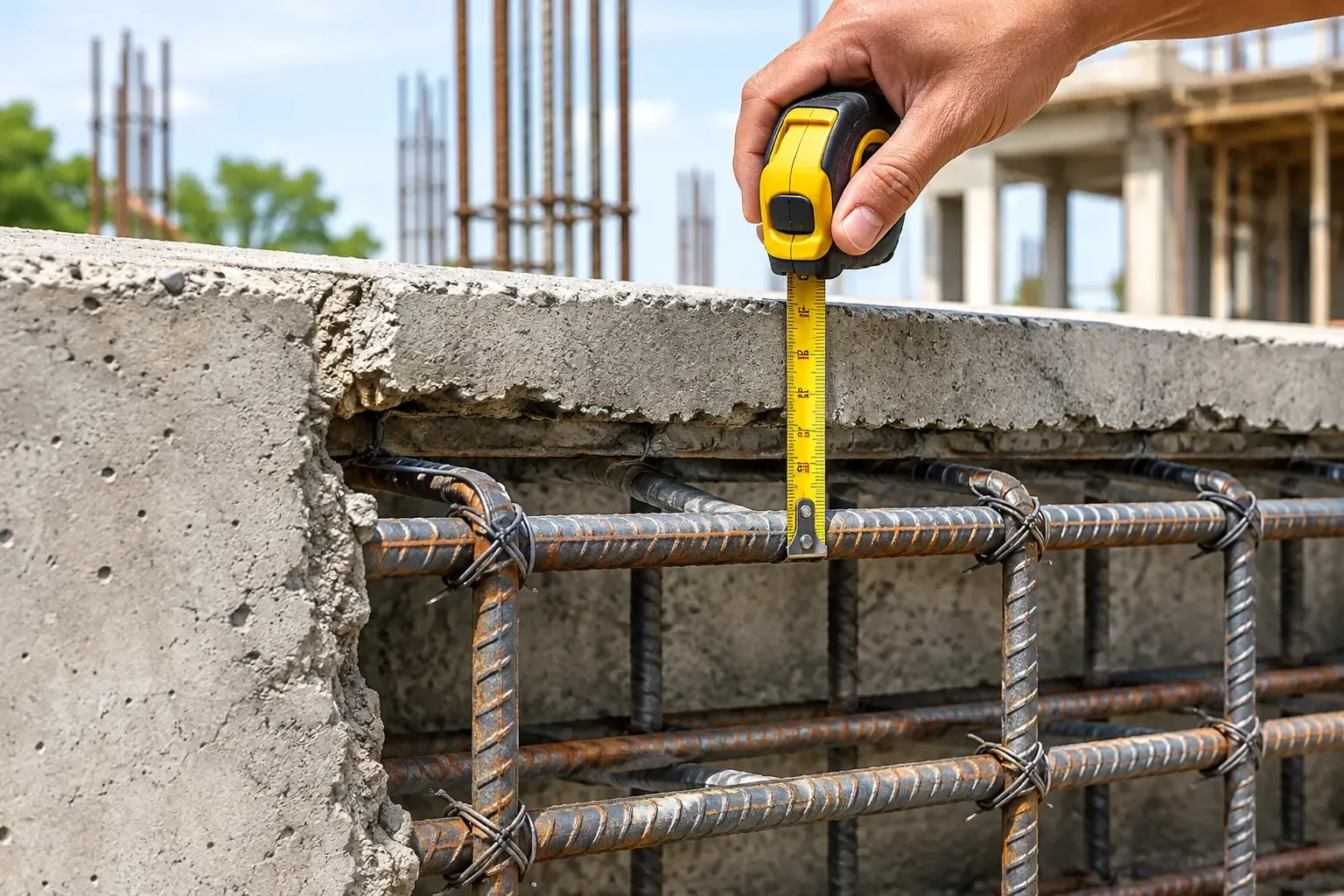
Concrete cover is the distance from the outer surface of the concrete to the nearest surface of the reinforcing steel, measured as required by the design and applicable code.
In columns and beams, this often means the distance to the outside of the links or stirrups, not simply the main bars deeper inside. In slabs, cover is checked to the reinforcement nearest the exposed surface.
The required value is not identical for every member. It depends on factors such as exposure conditions, structural requirements, fire resistance and the applicable design standard.
A homeowner should not choose the cover dimension by guesswork. Follow the structural drawing and the engineer’s instructions.
Why the steel needs protection
Concrete normally provides a protective environment around reinforcing steel. Its high alkalinity helps protect the steel against corrosion.
Over time, moisture and harmful substances can enter concrete. Carbonation can lower alkalinity near the surface. Chlorides, where present, may also increase the risk of corrosion.
Adequate, sound concrete cover helps slow that process by separating the steel from the environment. It also contributes to fire protection, because the concrete delays heat reaching the reinforcement.
Cover is therefore about long-term durability and safety, not just making a column look neat after removing shuttering.
What happens when cover is too small?
If steel is too close to the surface, the protective barrier is reduced. Under unfavourable exposure conditions, corrosion may begin earlier.
As steel corrodes, rust products can expand and put pressure on the surrounding concrete. Cracks, staining and spalling may develop. The problem can worsen if rainwater continues reaching the affected area.
Thin cover can also make bars more likely to become exposed when concrete is poorly compacted or damaged during shuttering removal.
Not every hairline crack means corrosion, but exposed reinforcement and rust staining deserve inspection.
Can cover be too large?
Yes. More is not automatically better.
Reinforcement is placed at carefully selected positions so the member can resist loads. Moving it away from the designed location can change the effective depth of a beam or slab and may affect structural performance.
That is why a worker should not simply place an extra-thick block under the steel to be ‘safe’. The correct cover is the value specified by the engineer, with the permitted construction tolerance.
If bars have moved out of position, they should be corrected before pouring, not ignored because there is still plenty of concrete around them.
Cover blocks: small items with an important job
Cover blocks and spacers hold reinforcement at the required distance from the formwork while concrete is being placed. Their material, size and spacing should be suitable for the element and construction method.
Improvised stones, broken bricks or random timber pieces are not reliable substitutes for approved spacers. They may move, crush, absorb water differently or leave weak spots.
Check that blocks are securely placed and will not shift when workers walk over reinforcement or when concrete is vibrated.
In slabs, use suitable chairs or other approved supports where reinforcement needs to remain at a specified level. Workers must avoid pushing bars down during placement.
What to inspect before a column or slab is cast
First, confirm the latest approved drawing. Check bar diameter, spacing, links and cover requirements against it.
Then inspect the actual location of the reinforcement. Are cover blocks present at suitable intervals? Are the stirrups touching the shuttering? Has a bar shifted near an opening or corner?
The formwork should be clean and stable. The concrete mix must be suitable for the reinforcement spacing so it can flow around the steel and be compacted properly.
The engineer should approve reinforcement and formwork before structural concreting starts. A photograph is useful for records, but it is not a substitute for inspection.
Cover and honeycombing often meet at the same problem area
Crowded steel and poor compaction can leave voids around reinforcement. If the cover zone contains honeycombing, the steel may not be protected as intended even if the distance looked correct before casting.
That is why concrete cover and concrete quality must be considered together. Proper mix proportioning, placement, compaction and curing help the cover concrete perform its protective role.
Plaster applied afterwards is not a replacement for missing or defective structural concrete cover. Exposed bars or deep cavities require engineering assessment and an approved repair method.
Extra attention for wet conditions in Northeast India
Assam and Meghalaya experience long rainy periods and persistent humidity. Water exposure can make defects in the cover zone more significant over time.
Pay attention to roof slabs, balconies, exterior beams, columns near the ground and members exposed to runoff. Proper drainage and waterproofing details reduce avoidable water entry.
Do not assume a waterproof paint can compensate for reinforcement placed too close to the surface. Protection begins with the structural design and correct construction.
Choosing cement without forgetting the details
Amrit Cement offers OPC and PPC options for different construction needs. AmritCem PPC may be considered where PPC is approved in the mix; its long-term durability characteristics can be useful when concrete is properly designed, compacted and cured.
But no cement can move an incorrectly placed steel bar back to its designed position. Amrit Support lists site demonstrations, concrete testing and raw-material guidance among its technical services. These can encourage better site practices, while cover requirements and reinforcement approval remain with the structural engineer.
Before dhalai, ask these questions
- Is the approved drawing available at the site?
- Are the specified cover blocks and supports in position?
- Has any reinforcement moved during shuttering or site traffic?
- Can concrete be placed and compacted around the steel?
- Has the engineer inspected the reinforcement and formwork?
- Are drainage and curing arrangements ready?
FAQs
What is concrete cover to reinforcement?
It is the specified distance from the concrete surface to the nearest reinforcing steel, measured as required by the design.
Is the cover the same for slabs, beams and columns?
Not always. Required cover depends on the member, exposure, fire and structural requirements. Follow the approved drawing.
Can broken bricks be used as cover blocks?
Use approved spacers or cover blocks suitable for the job. Random broken materials may not hold the steel reliably.
Does extra cover always improve durability?
No. Too much cover can shift reinforcement away from its designed position and affect the member’s behaviour.
Can PPC compensate for insufficient cover?
No. Correct concrete cover, reinforcement placement and compaction are essential regardless of whether Amrit Cement OPC or PPC is used.