How Aggregate Quality Affects Concrete Strength and Durability
A contractor may spend time comparing cement brands and then accept any pile of stone chips delivered to the site. But concrete is made of much more than cement.
Sand and coarse aggregates occupy a large share of its volume. Their size, shape, cleanliness and grading influence how concrete mixes, flows, compacts and performs after hardening.
That is why aggregate quality in concrete deserves attention before the first batch is prepared. Good cement cannot correct every problem caused by unsuitable aggregates.
What counts as aggregate?
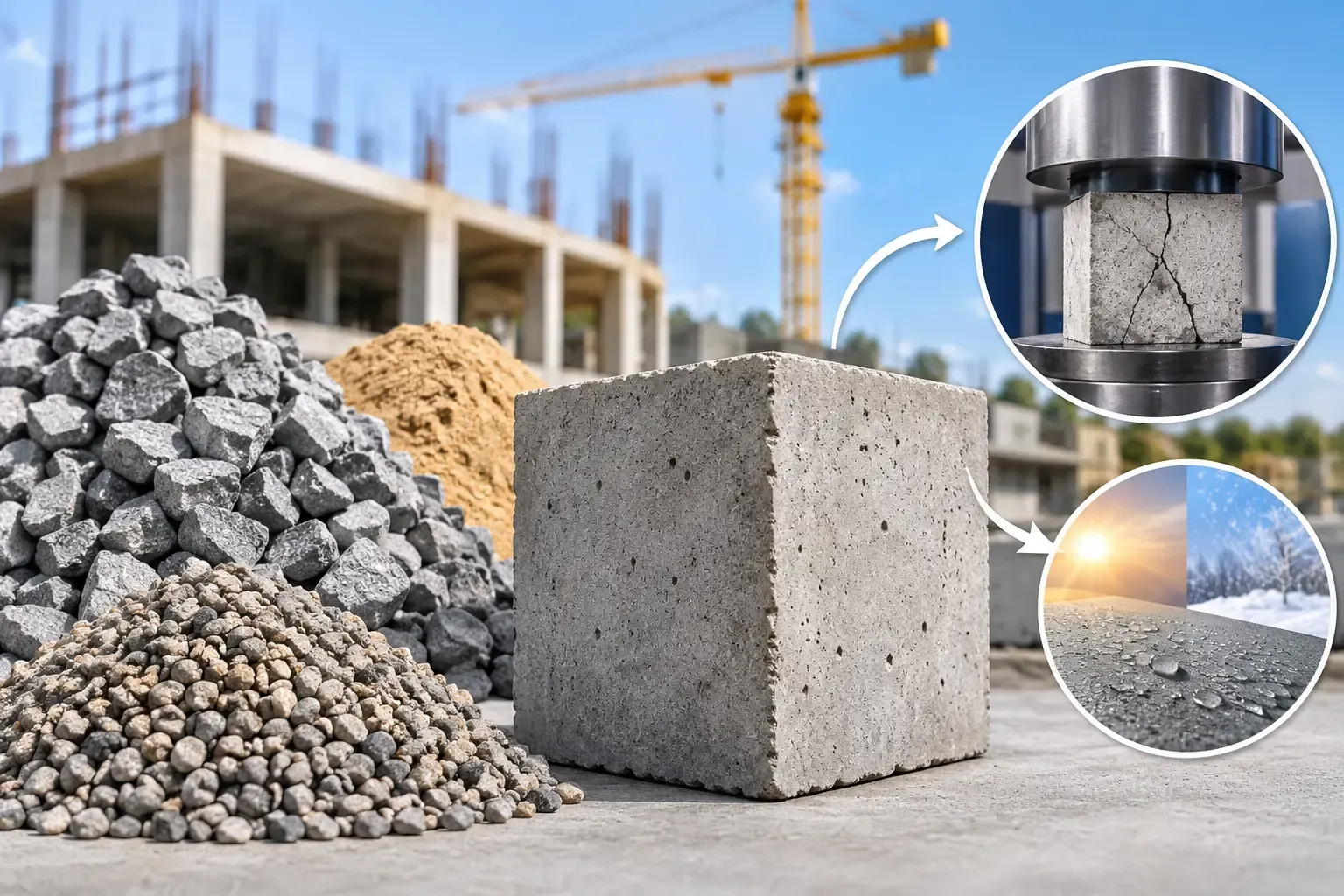
Aggregates are the granular materials used in concrete. Fine aggregate is usually natural sand, manufactured sand or a suitable combination. Coarse aggregate can be crushed stone, gravel or another approved material.
Different sizes work together. Smaller particles fill spaces between larger ones, while cement paste helps bind the material into a solid mass after hydration.
The engineer or concrete supplier selects aggregates to suit the concrete grade, reinforcement spacing, placement method and exposure conditions. What works in a plain concrete pathway may not be suitable for a heavily reinforced column.
Why grading matters more than appearance
Grading means the distribution of particle sizes. A well-designed combination of sizes helps particles fit together without leaving excessive gaps.
If a mix contains too many large particles and too few suitable smaller particles, it may become harsh and difficult to compact. Too much very fine material can also change water demand and workability.
Good grading helps the concrete achieve the required consistency with controlled amounts of paste and water. It can also reduce the risk of segregation when the mix is properly designed.
Do not judge a stockpile only by whether the stones look strong. The size distribution matters just as much as the material itself.
The shape and texture of stone chips
Crushed angular aggregates have rough surfaces. Rounded gravel is often smoother. These differences affect the way particles move past one another in fresh concrete and the amount of water or paste needed for workability.
Angular particles may provide useful mechanical interlock, but a mix with very flaky or elongated pieces can become difficult to place, especially around closely spaced reinforcement.
The aim is not to choose one shape for every project. The aim is to use aggregates that meet the applicable specification and perform well in the approved mix.
Mud, clay and organic matter are not harmless
Aggregates can become contaminated during quarrying, transport or storage. Soil, clay lumps, organic material and other unwanted substances may affect the bond between paste and aggregate or change water demand.
A pile that looks acceptable on top may have mud mixed into the lower layers if it was stored directly on bare ground.
Inspect deliveries and use suitable tests when quality is uncertain. Keep stockpiles on clean, firm, well-drained surfaces. Separate sand and stone sizes so they do not become mixed by vehicle movement or careless unloading.
Washing may help in some situations, but the material must meet the required grading and quality after processing. Do not assume that rinsing alone makes unsuitable aggregate acceptable.
Aggregate strength and durability matter too
Coarse aggregate should be sound and suitable for the forces and exposure conditions the concrete will face.
Weak, highly porous or easily broken pieces can affect concrete performance. Some aggregates may react harmfully with alkalis in cementitious materials under certain conditions, causing expansion and cracking over time. This is why suitable testing and source approval matter for projects where such risks are relevant.
Contractors should purchase from reliable suppliers and follow the project specification. A cheaper load of questionable stone may not remain cheap if it leads to rejected concrete or repairs.
Wet sand changes the actual water in the mix
This is particularly important during Northeast India’s rainy season. Sand stored in the open may carry a very different amount of water after heavy rain.
If a worker adds the same measured water without considering aggregate moisture, the total water content can change. That affects workability and may change strength and durability.
Surface moisture can also make fine aggregate appear bulkier in a loose container. For this reason, properly controlled batching by mass is generally preferable to rough volume estimates for quality concrete.
Check moisture levels and adjust the mix according to approved procedures. A bucket is not a moisture-testing instrument.
Aggregate size must suit the reinforcement
Large stones may be acceptable in some members but difficult to place in narrow sections with crowded steel.
If particles cannot move freely around the reinforcement, workers may struggle to compact the concrete. Honeycombing and voids can develop when the mix or placement method is unsuitable.
The approved nominal maximum aggregate size should account for member dimensions, reinforcement spacing and placement conditions.
Do not try to solve the problem by pouring in more water. The mix and method should be selected correctly before casting.
What poor aggregate handling does on site
Even approved aggregate can lose consistency after delivery. Repeated handling may separate particle sizes. Mixed stockpiles can change grading. Wet and dry portions can give different moisture contents in successive batches.
A practical site should keep individual sizes separated and avoid pushing the loader into the soil below the pile. Drainage should prevent runoff from carrying mud into sand and stone.
When batches vary unexpectedly, check aggregates before blaming the cement. Workability problems often begin outside the mixer.
Simple checks before concrete mixing
Ask where the aggregates were sourced and whether the required quality checks have been carried out. Look for visible contamination, excessive flaky pieces and mixed or inconsistent sizes.
Confirm that the selected size suits the reinforcement and concrete mix. Check moisture, especially after rain. Keep batch measurements and delivery details so problems can be traced later.
Where laboratory tests are required, sampling must be representative. A handful of clean-looking stones from the top of a pile cannot establish the quality of the whole delivery.
The Amrit Cement connection
Amrit Cement supplies OPC and PPC for different construction applications. AmritCem PPC can contribute to durable concrete when the full mix is properly designed, placed, compacted and cured.
But cement performance depends on the materials around it. Our Amrit Support specifically lists guidance on construction raw materials, as well as site demonstrations, slump testing and concrete testing services.
That support can help teams ask the right questions about sand, aggregate and mixing practices. It does not replace the engineer’s approved mix or required laboratory tests.
A strong concrete structure begins with material selection well before the cement bag is opened.
The aggregate checklist
- Buy from an approved, reliable source.
- Check grading, cleanliness and other required quality properties.
- Use aggregate sizes suitable for the member and reinforcement.
- Keep sand and stone on clean, drained surfaces.
- Protect stockpiles from mud and unwanted mixing.
- Check moisture before batching, especially after rain.
- Follow the approved concrete mix and water adjustments.
FAQs
Can bad sand reduce concrete strength?
Yes. Unsuitable grading, harmful impurities or incorrect moisture allowance can affect concrete quality and strength.
Are bigger stone chips always better?
No. Aggregate size must suit the concrete mix, member dimensions and reinforcement spacing.
Why does rain change concrete mixing?
Wet aggregates bring additional water into the mix. The amount of added water should be adjusted using the approved procedure.
Does aggregate shape affect workability?
Yes. Shape and surface texture influence how easily the mix flows and compacts, and may affect water demand.
Can high-quality Amrit Cement make up for poor aggregates?
No. Suitable cement must be combined with approved aggregates, controlled water, correct compaction and curing.