
Cement reacts with water. That reaction is useful when concrete or mortar is being made. But if cement starts absorbing moisture while it is sitting in storage, the reaction begins before the material reaches the mixer.
That is why storage is not simply about finding an empty corner for the bags.
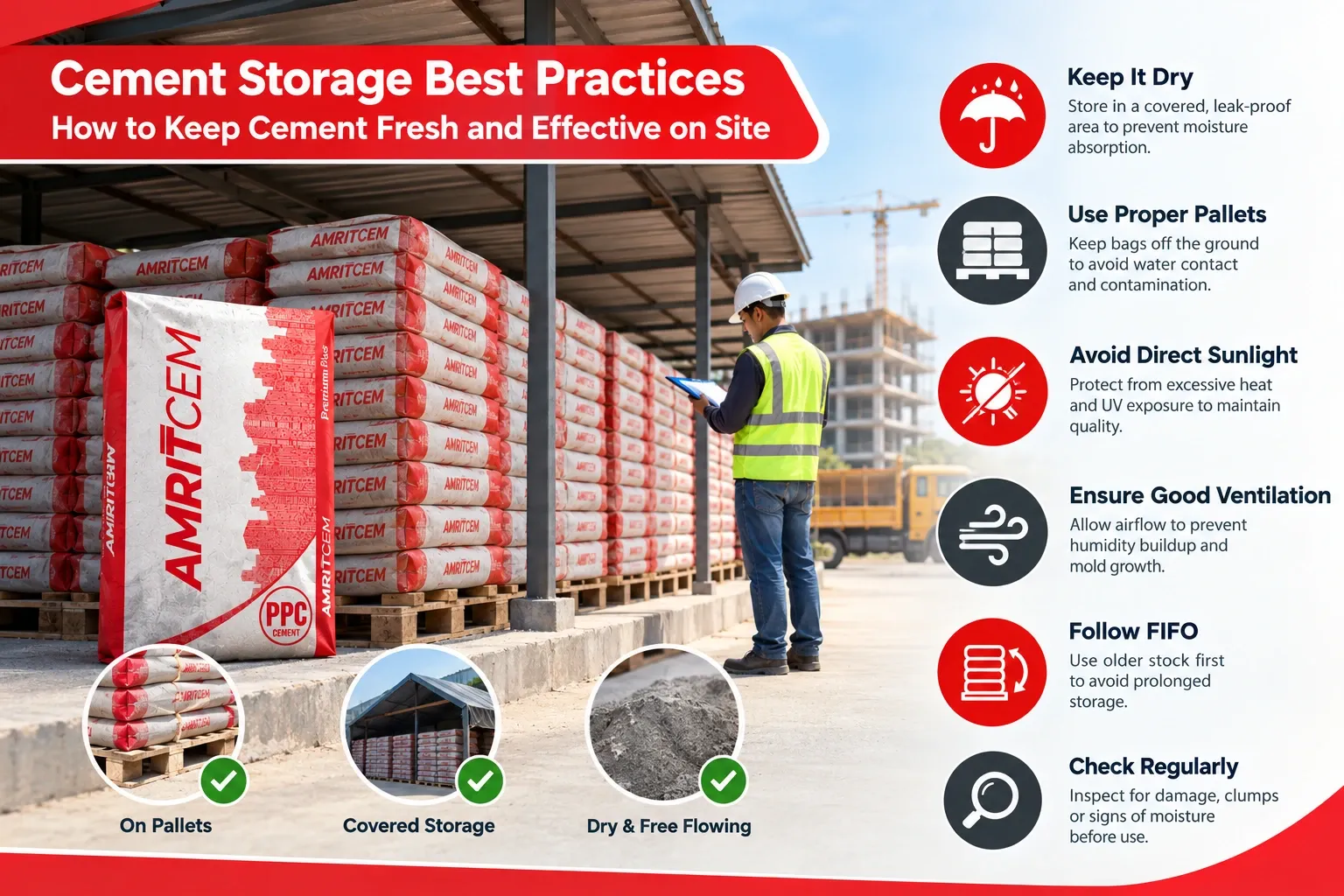
Good Cement Storage Tips begin with keeping cement dry, away from damp surfaces and organised so older stock gets used first. This becomes even more important on sites exposed to heavy rain and humidity.
Cement Does Not Need Direct Rain to Get Damp
A leaking roof is an obvious problem.
A damp floor is less obvious. So is moisture entering through an exterior wall or humid air repeatedly reaching poorly protected bags.
Cement is sensitive to moisture. Once enough moisture enters a bag, cement particles can begin reacting and forming lumps. With significant exposure, the cement may lose part of the performance expected from fresh material.
So, if you want to prevent cement from getting damp, do not think only about rainwater.
Look at the whole storage area.
Is the floor dry? Are there signs of seepage on the walls? Can rain blow through the opening? Does water collect near the storage room during the monsoon?
The condition of the room matters before the first bag enters it.
The Floor Is Not a Storage Rack
Placing cement bags directly on a concrete floor may look harmless.
It is not a good storage practice.
Moisture can reach the bags through a damp floor, particularly during the monsoon. Cement should therefore be stored on a raised platform rather than directly on the ground.
A practical site arrangement is to keep the stack approximately 150–200 mm above floor level using wooden planks or another suitable raised platform.
The stack should also be kept away from exterior walls. A gap of around 600 mm helps reduce the risk of moisture reaching bags from damp walls and also provides room for inspection.
These small distances can save a much bigger problem later.
How to Stack Cement Bags Without Creating Another Problem
Knowing how to store cement bags also means knowing how to stack them.
Very high stacks can become unstable and put excessive pressure on the bags at the bottom. As a general site practice, cement stacks are usually kept to a maximum of around 10 bags in height.
Bags should be arranged closely to reduce unnecessary air circulation through the stack.
For larger quantities, organise the bags into manageable stacks rather than turning the entire storage room into one inaccessible pile.
There is a practical reason for this.
If the bags at the back cannot be reached, they are likely to stay there longer. New deliveries then get used first while older cement continues ageing.
Which brings us to another simple rule.
The First Cement In Should Be the First Cement Out
Cement should not disappear into a storeroom until somebody happens to find it.
Mark deliveries by date and follow FIFO: First In, First Out.
Suppose one delivery arrives on Monday and another arrives two weeks later. The Monday stock should normally be issued first.
This sounds obvious, but busy sites often do the opposite because the latest bags are stacked nearest the entrance.
Plan the stacking arrangement so older material remains accessible.
A simple delivery record can include the date, cement type, quantity received and quantity issued. It does not need complicated software. It just needs to be maintained.
The Monsoon Changes the Storage Plan
For construction sites in Northeast India, cement storage deserves extra attention during the rainy season.
Long spells of rain, high humidity and water entering temporary storage areas can quickly turn a small storage weakness into material loss.
Before the monsoon, inspect the roof and walls for leakage. Check drainage around the storage area so rainwater cannot collect near the room.
Temporary outdoor storage needs even more care.
If cement cannot immediately be moved into a permanent dry store, keep it on a properly raised platform and protect the stack with a waterproof covering. The covering should protect the top and sides from rain while the arrangement prevents water from reaching the bags from below.
Do not place a tarpaulin over bags lying directly on wet ground and assume the cement is protected.
Water can come from underneath too.
A New Bag Should Not Automatically Go Into the Store
Storage quality starts at delivery.
Before accepting cement, look at the bags.
Check whether they are torn, wet or visibly damaged. Confirm the type and quantity against the order and invoice. Where relevant, check manufacturing information and other markings on the bag.
If some bags have clearly become wet during transportation, separate them instead of mixing them into the normal stack.
This is one of the simplest cement storage tips, but it prevents damaged material from becoming difficult to identify later.
What Do Lumps in Cement Tell You?
Not every small, soft lump automatically means an entire bag is unusable. Cement can sometimes develop minor soft lumps that break easily under light pressure.
Hard lumps are more concerning.
If cement contains hard lumps that do not crumble easily, it can indicate that moisture has already caused partial hydration.
Do not simply break those lumps with a shovel and treat the cement as fresh.
Questionable cement should be assessed appropriately before it is used, particularly for structural work. Where cement has been stored for an extended period or there is doubt about its condition, follow the project specifications and obtain technical guidance or testing where required.
The cost of checking a doubtful batch is small compared with the risk of putting unsuitable material into permanent construction.
Do Not Buy Months of Cement Just to Save on One Delivery
Bulk buying can reduce repeated transport and protect against short-term supply problems.
But cement is not a material you should stock without considering storage capacity and the construction schedule.
If a site needs 200 bags over the next few days, storing 800 simply because the price looks attractive may create a different problem.
Where will they go?
Can the room keep all of them dry?
Will the oldest stock remain accessible?
How long will some of those bags remain unused?
A better purchasing plan connects cement deliveries with the actual construction programme.
Buy enough to keep the work moving, with a sensible site buffer where required, rather than turning the site into a long-term cement warehouse.
Small Sites Need Storage Discipline Too
A homeowner building one house may not have a dedicated cement godown.
That does not make proper storage less important.
Choose the driest enclosed space available. Raise the bags from the floor. Keep them away from damp exterior walls. Protect the room from rain and make sure water cannot flow into it.
Then control access.
Cement bags are often moved, opened or left exposed when several teams are working on the same site. A defined storage area makes it easier to track material and notice damage.
Good storage does not require an elaborate warehouse.
It requires a dry, controlled space.
Before Leaving the Cement Store, Check Five Things
A site supervisor can catch most storage problems with a quick look.
Floor: Is it dry, and are the bags properly raised?
Walls and roof: Is there any dampness or leakage?
Stack: Is it stable and reasonably sized?
Stock: Are older deliveries being used first?
Bags: Are there signs of moisture, tearing or hard lumps?
If the answer to any of these raises concern, deal with it before another delivery arrives.
Good Cement Can Only Perform If It Reaches the Mixer in Good Condition
Cement manufacturers control production quality at the plant.
After delivery, the site takes over.
A bag left against a damp wall does not know that it came from a good plant. Cement stored on a wet floor does not stay protected because the concrete mix was designed correctly.
Storage sits between manufacturing and construction, and it can affect what finally reaches the mixer.
That is why knowing how to store cement bags is part of quality control, not housekeeping.
Keep cement dry. Raise it from the floor. Leave space from exterior walls. Control stack height. Rotate the stock. Inspect deliveries and give the storage area extra protection during wet weather.
None of these practices is complicated.
But together, they help prevent cement from getting damp and make sure the material you paid for reaches the construction work in the condition you expected.
FAQs
1. What is the best way to store cement bags on a construction site?
Store cement in a dry, leak-proof area on a raised platform. Keep the bags away from exterior walls, organise stable stacks and use older stock before newer deliveries.
2. How high should cement bags be stacked?
As a general storage practice, stacks should normally not exceed around 10 bags in height. The exact storage arrangement should also consider bag stability, access and site conditions.
3. How can I prevent cement from getting damp during the monsoon?
To prevent cement from getting damp, use a dry and leak-proof storage space, keep bags raised from the floor and away from damp walls, maintain drainage around the store and protect temporary stacks properly from rain.
4. Can cement bags be stored directly on a concrete floor?
They should not be placed directly on a potentially damp floor. A raised platform, commonly around 150–200 mm above floor level, helps protect bags from ground and floor moisture.
5. Can I use cement that has lumps?
Small soft lumps that crumble easily may occur, but hard lumps can indicate moisture exposure and partial hydration. Do not assume such cement is suitable for use. If its condition is doubtful, especially for structural work, obtain appropriate technical guidance or testing before use.