
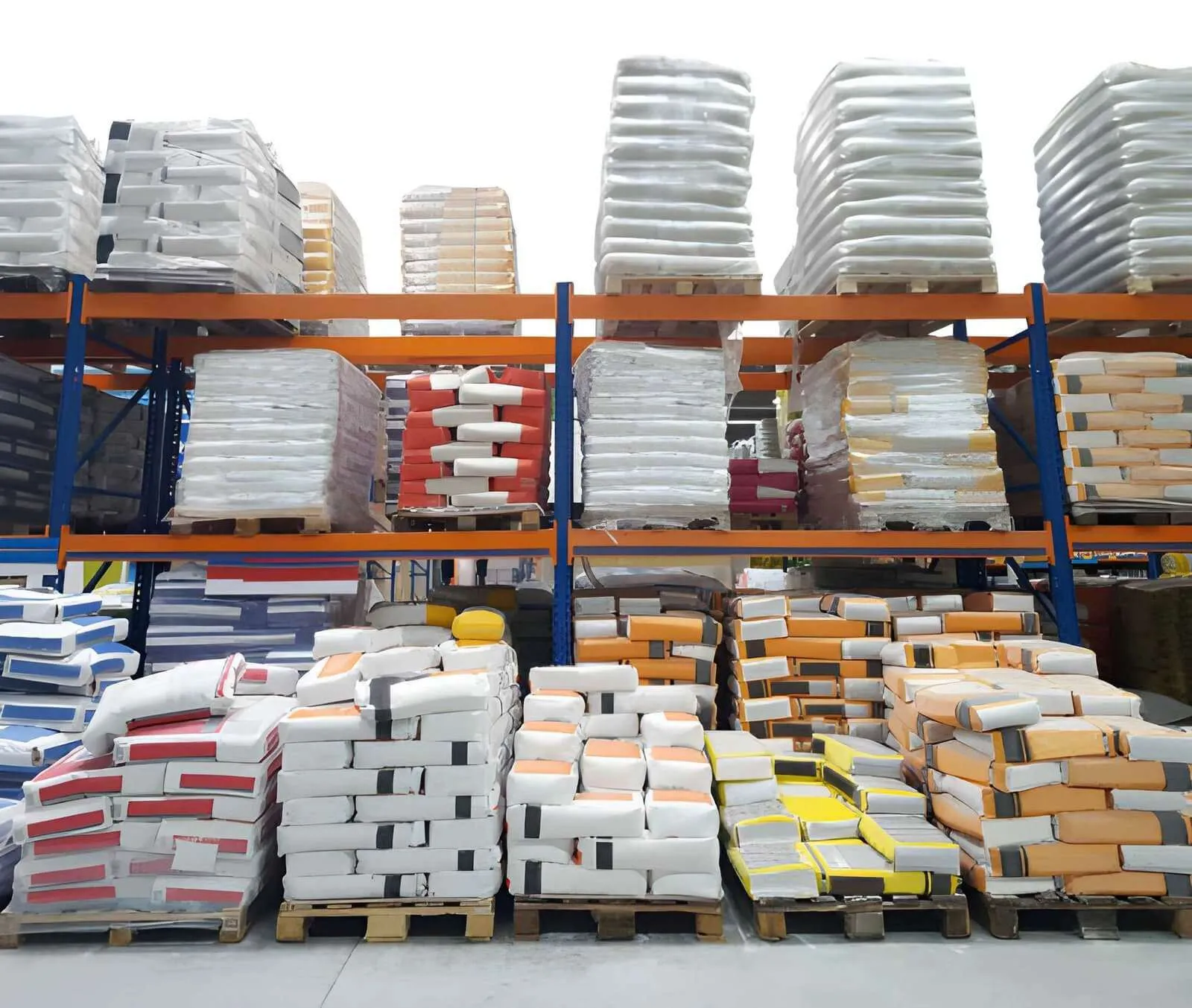
Cement Storage Guide: Best Practices for Dealers, Contractors & Homeowners
Cement is one of the toughest things on a construction site, no question about it. It builds homes, bridges and highways that are still standing decades on. So it’s pretty natural to think that a bag of cement can just sit around for as long as you need it and still perform just as well when you open it up.
But the truth is: that assumption is costing you money – and weakening your buildings.
The thing is, the quality of cement actually starts to go downhill from the minute it leaves the factory. Plus, the rate at which it loses quality depends almost entirely on one thing – how you store it. Good cement storage keeps a bag fresh and usable while poor storage can turn a fresh bag into a lumpy, sub-par product that really shouldn’t be going into a foundation, a slab or a wall.
Cement Has a Shelf Life, and It’s Shorter Than You Think
Cement has a sneaky way of sucking moisture out of the air even when absolutely nothing is amiss – no rain in sight, no leaks, no signs of any water anywhere nearby, just a humdrum dry atmosphere. And then the moment it hooks up with water (even just the humidity in the air) is when things get really out of hand. The thing is, that’s when all the magic happens in the world of concrete – cement reacts with water and that reaction is what ultimately makes concrete set and harden. The thing is though you want that to happen in the mixer – not in the sealed bag that’s been sitting on a shelf somewhere.
India has got some pretty clear ideas on this stuff – the Bureau of Indian Standards reckon you should be using your cement within 3 months of its manufacture date to get the best results. And if its been sitting around longer than that, then it might be worth getting it tested before bothering to use it. But the truth is most people just ignore the manufacture date on the pack & just grab the top one on the pile and pour it out.
What Actually Goes Wrong When Cement Sits in the Wrong Place
Picture a bag of cement on a floor of rough old concrete, propped up against a shed wall that’s letting in the rain, and you’ve got a recipe for trouble. Here’s what happens to it, week by week.
- It sucks up water from the ground. You don’t have to be a rocket scientist to know that floors like that hold onto moisture – especially the bits near the ground. Bags of cement left to sit on a damp floor will soak up all that excess water from underneath.
- It soaks up dampness from the wall. The outer walls of that shed are probably letting in all sorts of moisture, and a bag pushed up against it is going to be a sponge for all that damp air and water seepage.
- The air gets to it too. Even in a dryish looking shed, the air can be humid enough to slowly start breaking down the cement. This is the slow-acting killer that will affect every bag of cement – even the ones stored in pretty decent conditions.
- Strength gets lost. This is the bit that’s going on under the radar, but it’s costing you – bit by bit. Even if there aren’t any obvious lumps, cement stored just sitting around will gradually lose its compressive strength over time. This is a well-documented phenomenon in the world of concrete technology – and it affects cement just left sitting around in normal atmospheric conditions:
| Storage period | Approximate strength retained |
|---|---|
| Fresh (0 months) | 100% |
| 3 months | ~80% |
| 6 months | ~70% |
| 12 months | ~60% |
| 24 months | ~50% |
These numbers aren’t fixed though, they change depending on the humidity & how well the bag is sealed – but the direction of the loss is always going the same way. A bag that’s been stored for a year will give you about 40% less oomph compared to a fresh one – yet it still looks virtually brand new. Pour that cement into a slab and you’ve inadvertently built a weaker structure than what your designers intended.
How to Store Cement Bags the Right Way
And the good news is that protecting cement isn’t a costly or overly complicated ordeal. It ultimately comes down to keeping bags off the floor, away from the walls & the air can’t get at them; & they get used as they should come off the shelf. That’s the basic principle but let’s break it down for each group as to what that actually looks like.
For Dealers: Cement Warehouse Tips That Protect Your Margin
The stock is essentially your money, so treat your warehouse like a fortress, a vault where your goods are safe and sound.
- Get everything off the ground. Store your bags on a solid platform using wooden planks over bricks, ideally about 6 inches up from the floor – simple but effective way to keep moisture from creeping in and damaging those bottom layers.
- Give some breathing room around the edges. Make sure there’s some space between your stacks and the walls – at least a foot or two of clearance so air can circulate and keep things fresh.
- Don’t overload the shelves. Try not to stack more than 10 bags high. If you go any higher the weight starts to compress the powder and you’ll end up with “warehouse pack” – the cement will form lumps under its own pressure, even without any moisture getting in the way.
- Go with the FIFO rule – First In, First Out. Sell your oldest stock first – its just common sense, really. Get your warehouse set up so your older bags are easy to get to and your new deliveries go to the back. Thats the surest way to make sure none of your stock quietly slips past its use-by date.
- Make sure your building is sealed up tight – get those roof leaks fixed before the rainy season starts, keep your windows shut when the rain is coming down, and pack your bags close together so there’s less surface exposed to the air.
- Dress your stacks up with a protective layer. Wrap those piles in waterproof tarpaulin or thick plastic sheeting as an extra layer of defence against the elements.
For Contractors: Storing Cement on the Job Site
Site storage is a whole different thing compared to warehouse storage because the conditions are much rougher and stock gets used up in no time. The rules of the game dont change, but having the discipline to follow them really does matter here.
- Build a raised platform on site with a bit of cover rather than just chucking bags on the ground or on some loose sand.
- Keep your cement in a shed or room with a proper roof on it, not out in the open under some leaky shed where rain gets in sideways and wrecks everything.
- Buy your cement in batches that you know you can use up within a few weeks rather than taking delivery of a massive order that just sits around getting damp in the elements.
- Buy your cement in the order that it was made, use the oldest first – same rule that your supplier uses for you.
- And whatever you do, dont even think about storing cement next to any wet sand, aggregate or freshly poured work – all that dampness can spread and cause problems.
For Homeowners: Small Quantity, Same Science
If you’re tackling a building project or renovating your place and happen to have some spare bags lying around, the same basic rules still apply at a smaller scale.
- Don’t just leave those bags sitting on a bare floor in some damp storage room or just parked in an open garage – it’s an accident waiting to happen.
- But there are ways to store them safely – try placing them on a wooden pallet or a few bricks, or even a thick plastic sheet that keeps them off the cold, damp ground.
- And it’s not just about keeping them off the floor – get them away from that outer wall and your terrace too.
- Once you open a bag for whatever reason, make sure to wrap it up nice and tight in some additional plastic so you can keep it in decent nick, and use the contents of the opened bags first rather than the new unopened ones.
- And when you buy a bag, check out the manufacturing date on the packaging, okay? – if it’s been just sitting there for months and it feels all stiff or lumpy because it’s all dried out and uneven, then I’d say leave it for something else – structural work is no time to be taking chances with dodgy materials.
Cement Storage in Monsoon: The Northeast Needs Extra Care
Storage advice written specifically for dry plains won’t do much good for the Northeast. Immerse yourself in the fact that parts of Meghalaya – like Mawsynram and Cherrapunji – are right up there among the wettest places on earth, and for months on end the humidity in Assam, Tripura and all that surrounding area stays stubbornly high. This means that even before you even have to worry about any roof leaks the air itself is going to be working against your stock.
During the monsoon season, dont let things get sloppy – do this:
- Lift your platforms up high enough. You want your bags to be way above any water that might just pool on the floor so add a little extra height.
- Double up on the covers. Throw a tarpaulin over the top of everything and make sure each and every individual bag is sealed. The main idea here is to prevent that moisture getting to the cement from either the floor down below or the air up high.
- Order in smaller quantities. With slower monsoon sales, your stock just sits there getting ruined for longer. Get in some smaller orders and make sure you’re rotating your stock quickly so none of it gets damaged.
- Give the place a once a week inspection. Take a walk through the warehouse and have a good look at the bottom layers of your stock. If any of it’s starting to get lumpy then pull it out of saleable stock and be done with it pronto.
- Keep an eye on the roof and the drains. One clogged drain or a single cracked sheet can ruin an entire bottom row of stock in one night.
A Realistic Look at the Numbers
Let’s say you have a dealer with 300 bags of cement who’s lived through a pretty sweltering season. We’ll assume that sixty of those bags are pretty sluggish and end up sitting for six months in pretty average conditions – they get raised a bit, but aren’t sealed up as they should be. To top it all off, this dealer doesn’t bother with a first in first out system either.
With the numbers we discussed earlier, those sixty bags now have around 7 in 10 of their original strength left in them. They don’t look any worse for wear, so they’ll probably still sell for full price – but the contractor that ends up buying them is essentially working with a product that’s 30% weaker than they should be. The fix, incidentally, costs next to nothing – just a raised platform, a tarpaulin, stacking them under ten bags at a time, and a simple first in first out storage system. But the losses that come from skipping it – rejected stock, weak concrete, lost trust – those are real costs that really add up.
Conclusion
Strong cement or weak cement – it’s not like it all comes from the same factory, packaged the same way, and all leaves on the same day. The difference comes down to a few short weeks spent in your warehouse, on your site or in your stockroom. What you do with those few weeks will determine whether you get the full strength out of your cement. Keep those bags raised, sealed up, away from the walls, stacked low, and make sure you’re using that FIFO system – and for goodness sake, check the manufacturing date before you let anything that matters go into a mix.
At Amrit Cement we design cement to perform from top to bottom – give it the right treatment and it will deliver every single bit of strength that we engineered into it.
Buy fresh. Store smart. Build strong. To find your nearest Amrit Cement dealer or learn more about our products, visit amritcement.com.