
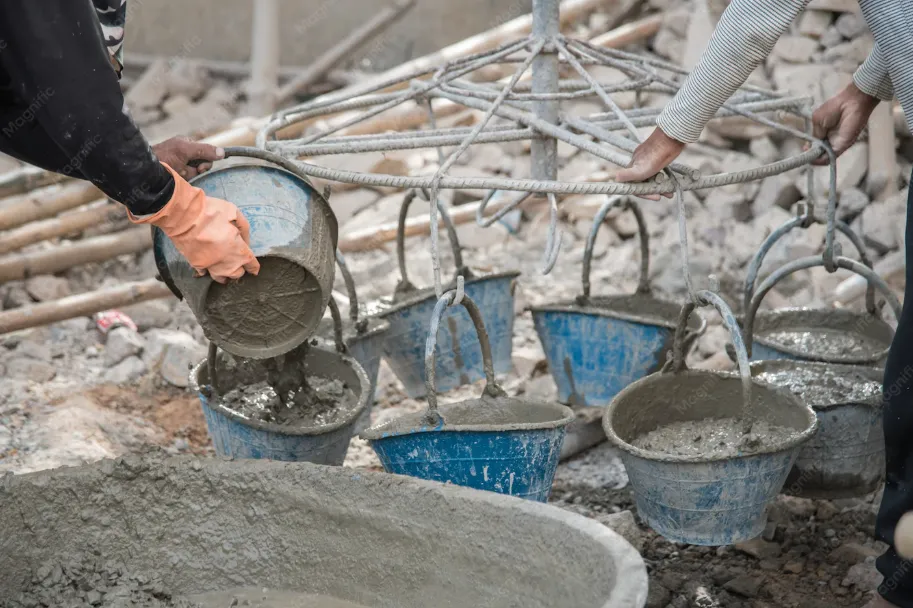
One of the most common problems during construction is either ordering too much cement or running out of cement in the middle of work. Both situations increase cost, delay construction and create unnecessary confusion on-site. That is why understanding the correct cement production process of estimation and material planning is extremely important before starting any project. Whether you are building:
- a home
- a slab
- a wall
- a foundation
- or plastering work
calculating cement properly helps improve:
- project budgeting
- material management
- construction quality
- labour planning
Today, many homeowners search for:
- how much cement do i need
- cement bag calculation
before starting construction work. So, let’s understand how to calculate the right amount of cement step by step in a simple way.
Why accurate cement calculation matters
Cement is one of the most important materials used in construction. Incorrect estimation can directly affect both project cost and construction quality. Proper cement estimation helps in:
Better Cost Control
You avoid overspending on unnecessary material purchases.
Stronger Construction Quality
Correct cement quantity ensures proper concrete strength and durability.
Reduced Material Waste
Excess cement often gets damaged due to moisture exposure during storage.
Smooth Construction Workflow
Material shortages can stop work completely and delay project timelines.
That is why proper planning is just as important as the actual cement production process itself.
First understand the type of construction work
Different construction activities require different amounts of cement.
RCC Work
RCC slabs, beams and columns require higher cement quantity because strength is the priority.
Brickwork
Brick masonry uses comparatively lower cement quantities.
Plastering
Plastering usually requires thinner cement layers, so consumption remains lower.
Before using a cement calculator, always identify the exact type of work first.
Step 1: Measure the total concrete volume
The first step in cement bag calculation is measuring the volume of the area.
Formula:
Volume = Length × Width × Thickness
Example:
Suppose you are constructing a slab.
- Length = 10 ft
- Width = 10 ft
- Thickness = 0.5 ft
Volume = 10 × 10 × 0.5 = 50 cubic feet
Now convert cubic feet into cubic meters.
Conversion:
50 ÷ 35.31 = 1.42 m³
This is the total concrete volume required.
Step 2: Understand the concrete mix ratio
Concrete is made by mixing:
- cement
- sand
- aggregate
- water
A common RCC mix ratio used in residential construction is:
1:2:4
- 1 part cement
- 2 parts sand
- 4 parts aggregate
Total parts = 1 + 2 + 4 = 7 parts
Step 3: Calculate cement quantity
Now calculate the cement portion from the total volume.
Cement share:
1/7 of total concrete volume
Formula:
1.42 ÷ 7 = 0.203 m³
This is the required cement volume.
Step 4: Convert cement volume into bags
1 cubic meter of cement weighs approximately 1440 kg.
One cement bag contains 50 kg cement.
Cement weight:
0.203 × 1440 = 292 kg
Number of cement bags:
292 ÷ 50 = approximately 6 bags
So, for a 10×10 ft slab with 0.5 ft thickness, you will need around 6 cement bags.
This is one of the simplest methods used in a cement calculator.
Quick cement estimation for common construction work
Here’s a simple table to help estimate cement requirement quickly.
| Construction Work | Approx. Cement Bags Needed |
| RCC Slab (100 sq ft) | 6–7 bags |
| Brickwork (9-inch wall) | 2–3 bags |
| Plastering (12 mm thick) | 1–2 bags |
These are approximate values and may vary depending on:
- design
- thickness
- mix ratio
- site conditions
Factors that affect cement requirement
Many factors influence final cement quantity during construction.
- Thickness of Structure
Thicker slabs and walls naturally require more cement.
- Concrete Grade
Higher grades like M20 or M25 consume more cement because they require stronger concrete.
- Mix Ratio
Different mix ratios directly affect cement quantity.
For example:
- 1:1.5:3 uses more cement
- 1:2:4 uses comparatively less cement
- Wastage Margin
Always add around 2–5% extra cement for handling loss and minor wastage.
- Site Conditions
Poor material handling and moisture exposure can increase cement consumption.
Why cement quality also matters
Correct quantity alone is not enough. Cement quality also plays a major role in construction strength. Good-quality cement provides:
- stronger bonding
- better durability
- improved crack resistance
- long-term structural stability
This is why choosing a trusted cement brand matters during construction planning.
Use a cement calculator for better planning
Today, many builders and homeowners use online cement calculator tools for faster estimation. A good cement calculator helps calculate:
- cement quantity
- sand quantity
- aggregate requirement
- approximate project cost
These tools save time and reduce manual estimation mistakes.
However, for large projects, always consult:
- site engineers
- contractors
- structural experts
for more accurate calculations.
Common mistakes during cement bag calculation
Many people make small estimation mistakes that later create major construction issues.
Common errors include:
- ignoring wastage margin
- incorrect thickness measurement
- wrong mix ratio selection
- poor unit conversion
- buying old or damaged cement
Careful planning helps avoid these problems.
How much cement do I need for house construction?
The answer depends completely on:
- house size
- floor count
- construction type
- structural design
- RCC requirement
A small single-floor house may require a few hundred bags, while larger projects can consume thousands of cement bags.
That’s why accurate cement bag calculation should always be done phase by phase instead of estimating randomly.
Importance of proper cement storage
Even after proper estimation, poor storage can damage cement quality.
Cement should always be:
- stored in dry areas
- protected from moisture
- placed above ground level
- covered properly
Moisture exposure can reduce cement strength significantly.
Final thoughts
Understanding how much cement do i need before starting construction helps improve:
- budgeting
- material planning
- construction quality
- project efficiency
Whether you use a manual method or an online cement calculator, proper estimation helps avoid unnecessary cost and construction delays.
And while understanding the cement production process is important, understanding how to calculate and use cement correctly is equally important for strong and durable construction.
Because smart construction always begins with smart planning.