
Good Materials Still Need the Right Application
You can buy good cement, quality steel and the right aggregates.
But if workers add too much water to the concrete, ignore proper mixing, compact it poorly or stop curing too early, the final structure can still suffer.
This is where on-site construction assistance becomes useful.
It brings technical knowledge directly to the construction site. Instead of identifying problems after the work is complete, technical teams can help builders understand correct material use, construction practices and quality requirements while the work is happening.
For homeowners, contractors and site teams, this additional guidance can make quality construction easier to achieve.
What Is On-Site Construction Assistance?
On-site construction assistance is technical support provided at or around a construction site to help teams use materials and construction practices correctly.
Depending on the project and service provider, this may include:
- Guidance on cement selection and application
- Concrete and mortar mix recommendations
- Advice on water-cement ratio
- Support for proper mixing and placement
- Guidance on concrete compaction
- Curing recommendations
- Material storage advice
- Identification of common workmanship issues
The purpose of technical site assistance is not to replace the architect, structural engineer or contractor.
It supports them by helping site teams follow recommended practices during actual construction.
Why Does On-Site Support Matter?
Construction drawings tell you what to build. Specifications tell you which materials and standards to follow.
But execution happens on site.
And this is where small mistakes can affect the final result.
- A little extra water may make concrete easier to place.
- Poor vibration may leave honeycombing.
- Cement bags may sit in a damp storage area.
- Curing may stop earlier than required.
- Mortar proportions may change from one batch to another.
Each mistake may look small while the work is underway. Together, they can affect strength, durability and finish.
Expert construction support helps site teams identify and correct such practices early.
1. It Helps Select the Right Cement for the Application
Not every part of a building has exactly the same requirement.
Foundations, RCC columns, roof slabs, masonry and plastering perform different functions.
Therefore, cement selection should consider the application, structural requirements and exposure conditions.
Through proper cement application guidance, site teams can better understand where OPC or PPC may be suitable and how the selected cement should be used.
The final cement choice for structural work should always follow the engineer’s specification and approved concrete design.
2. It Helps Control the Water-Cement Ratio
Adding extra water is one of the easiest ways to make concrete more workable.
It is also one of the easiest ways to affect its quality.
Excess water can increase porosity and reduce the strength and durability of hardened concrete.
Technical guidance can help workers understand the importance of following the specified water-cement ratio rather than adjusting water simply by looking at the mix.
This becomes even more important during the monsoon, when wet sand and aggregates may already contain additional moisture.
3. It Improves Mixing and Placement Practices
Good concrete needs consistent mixing.
Workers should measure materials correctly, follow the approved mix and allow sufficient mixing before placing the concrete.
Once mixed, concrete should also reach its final position without unnecessary delays or segregation.
On-site construction assistance can help identify problems in these practices and guide the team towards more consistent execution.
The same applies to masonry mortar and plaster mixes.
Consistency from one batch to the next matters.
4. It Helps Prevent Poor Compaction
Fresh concrete can trap air during placement.
Proper vibration removes this trapped air and helps concrete settle around reinforcement and into corners of the formwork.
Poor compaction can result in voids and honeycombing.
Over-vibration can also create problems by contributing to segregation in unsuitable conditions.
Technical teams can guide workers on proper placement and compaction practices according to the work being carried out.
The aim is simple: concrete should become dense and uniform.
5. It Makes Curing Part of the Construction Plan
Curing should not begin as an afterthought.
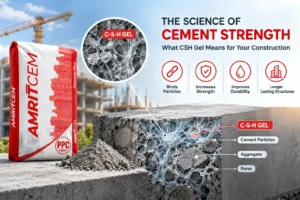
Concrete needs sufficient moisture for cement hydration to continue and for the material to develop its intended properties.
The curing method and duration depend on the application, cementitious system and site conditions.
Through technical site assistance, teams can understand when curing should begin, which method is suitable and why continuous curing matters.
This can help reduce problems linked to inadequate early-age moisture control.
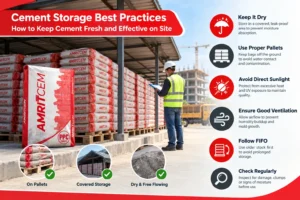
6. It Helps Improve Cement Storage
Cement can lose quality before workers even open the bag if the site stores it incorrectly.
Moisture is the main concern. Technical support can help teams organise storage so that cement bags remain:
- Inside a dry and covered area
- Raised above the floor
- Away from damp external walls
- Protected from rain
- Used in proper stock rotation
This is particularly important during humid and rainy conditions. Buying quality cement is only useful when the site protects its quality until use.
7. It Can Identify Problems Before They Become Repairs
Many construction defects become expensive once the next stage begins. Like:
- Honeycombing is harder to address after finishing.
- A leaking pipe becomes more expensive after tiling.
- Poor plaster preparation becomes obvious after cracks appear.
- Incorrect roof slope becomes a problem when water starts collecting.
This is why early inspection matters. Expert construction support can help identify visible workmanship and application problems while corrections are still practical.
Fixing something during construction is usually easier than breaking finished work later.
8. It Helps Homeowners Understand What Is Happening on Site
Most homeowners are not engineers. They should not need to become engineers simply to build a house. However, basic technical guidance can help them ask better questions.
- Why is this cement being used here?
- Is the concrete mix being followed correctly?
- Why does the slab need curing for this period?
- How should cement be stored?
- What should we check before the next stage begins?
Good on-site construction assistance can make these decisions easier to understand without asking homeowners to manage technical design themselves.
On-Site Assistance Does Not Replace Engineering Supervision
This distinction is important. Technical assistance from a cement company, material supplier or construction-support team should not replace the project’s structural engineer, architect or qualified site engineer.
Structural design, concrete grade, reinforcement, foundation design and other engineering decisions require qualified professionals.
Technical assistance works best as an additional layer of support.
The engineer defines the requirement.
The site team executes it.
Technical assistance helps the team use the material correctly and follow better construction practices.
How Amrit Cement’s Technical Support Can Help
Choosing the right cement is only one part of building well. Using it correctly matters just as much.
Amrit Cement’s technical support can help customers and construction teams better understand cement applications and recommended site practices. Depending on the requirement, this can include cement application guidance and support related to mixing, concrete practices, curing, storage and other aspects of cement use.
For homeowners and contractors, such support can help connect product selection with actual site execution.
Because cement performs inside the structure.
Its application should receive as much attention as its selection.
Better Construction Needs More Than Better Materials
A strong building does not come from one decision. It comes from getting many small decisions right.
- Select the correct cement.
- Measure the water properly.
- Mix consistently.
- Compact concrete correctly.
- Cure it adequately.
- Store materials safely.
- And check the work before moving to the next stage.
That is why on-site construction assistance matters. It takes technical knowledge closer to the place where construction quality is actually decided the site.
Good materials give you the potential to build well. Good execution helps you achieve it.
Frequently Asked Questions
1. What is on-site construction assistance?
On-site construction assistance provides technical guidance to contractors, workers and homeowners during construction. It can cover cement use, mixing, placement, compaction, curing, storage and other site practices.
2. Does technical site assistance replace a structural engineer?
No. Technical site assistance supports construction execution but does not replace structural design or professional engineering supervision.
3. Why is cement application guidance important?
Different construction applications have different requirements. Cement application guidance helps site teams understand suitable cement use and the practices needed for better performance.
4. Can on-site assistance improve concrete quality?
It can help teams follow better practices for batching, water control, mixing, placement, compaction and curing. These factors directly influence the quality of concrete.
5. Who can benefit from expert construction support?
Homeowners, contractors, masons, site supervisors and construction teams can benefit from expert construction support, particularly when they need practical guidance on material use and site practices.