Concrete is the one part of your house you generally don’t give much thought to. Its the framework – the columns that hold up the walls, the beams that keep the roof up, the slab that’s right above your head – That’s how it’s supposed to be – you mix it, pour it, and once it sets that’s it – its there silently holding up everything around you while you get on with your life for decades.
Thats why weak concrete can be so darn bad news. You dont typically have it give out on you the first day, no, that’d be quite a show – it looks fine at first glance but then you start to see little hints – a tiny hairline crack here, a patchy spot there, some brownness seeping through the paint. Most of the time people glance over that and just say ‘oh thats just cosmetic’ and move on.
They shouldn’t though. Those little warning signs are like your foundation telling you something’s wrong on the inside. If you keep ignoring them, what was just cosmetic turns into cracked columns, a sagging roof, and repair bills that blow the roof off the original cost of getting it done right in the first place.
This guide takes you through the warning signs of weak concrete you shouldnt ever just dismiss, the root cause of all those signs, and most importantly how to make sure your concrete has got the strength to last from day one.
Why Weak Concrete Is the Danger You Can’t See
The trap is here: When freshly laid concrete is a dull grey color, weak and strong slabs can look identical. But the difference comes down to what’s going on out of sight – how much water was added to it, how well it was compacted in the pit, and just how well it was looked after after being poured. You can’t tell by just looking at the finished surface.
So a slab that is basically 30% weaker than it should be gets finished off and looks absolutely fine. The family moves in, years pass – and then the signs start to show up one by one as the weakness starts to work its way to the surface. By the time you realise there’s a problem it’s all too late and things are only getting worse – because weak concrete just gets weaker and never recovers.
That’s why spotting the warning signs early on really is so important.
The Signs of Weak Concrete You Should Never Ignore
Cracks — But Know Which Kind
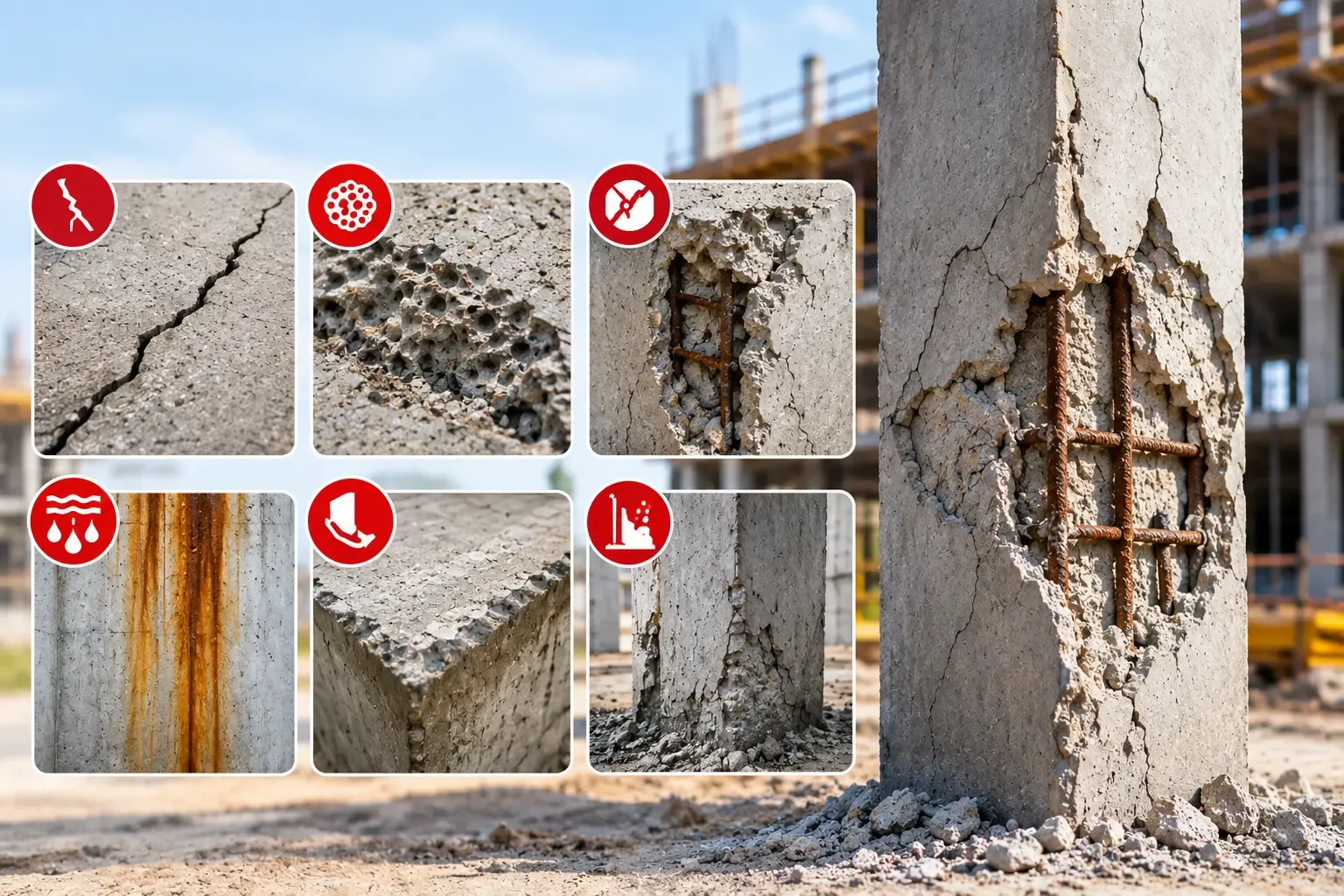
Not every crack is a major headache, but every one should be taken a look at. Fine surface cracks – just a shallow little web on top of a slab – usually turn up because the concrete dried out too fast and didnt cure properly. Theyre probably not the end of the world but theyre definitely worth knowing about still.
The ones that get your heart racing are the big, deep cracks – like diagonal cracks right across a beam or column, or a crack that just goes straight through the concrete. Those are telling you there’s a structural issue on your hands, not just a surface problem. If a crack is wide enough for you to stick a coin into, or if its getting worse, dont even think about just painting over it. Get it looked at.
Honeycombing — Rough, Pitted, Full of Gaps
Take a gander at a freshly stripped column or beam. If its got a rough, pitted look with lots of visible gap spaces (where the concrete never filled in properly) you’re probably looking at honeycombing. This is what happens when the concrete just didnt get a chance to compact properly – so there are weak points and gaps for water and air to get to the steel inside. Honeycombing is pretty much a dead giveaway something went wrong during the pour.
Spalling and Rust Stains— The Steel Is Rusting
If you notice chunks of concrete flaking off and you see rusty brown stains coming through – you need to sit up and take notice. This usually means the steel bars inside are rusting. Rust expands a lot – so as it corrodes its pushing the concrete apart from the inside out – cracking it and breaking it off. But by the time you can see the rust, the structure is already losing its strength.
A Surface That Dusts or Crumbles
Run your hand or a key across the concrete. If the surface powders, rubs off, or crumbles under light pressure, the concrete is weak at the top. This usually comes from too much water in the mix or poor curing, and it means the surface never developed proper strength.
White Patches and Water Seepage
White, powdery deposits on the surface — efflorescence — mean water is moving through the concrete and leaving salts behind. Damp patches and actual leaks through a slab or wall mean the concrete is porous, which almost always goes hand in hand with lower strength. Strong, dense concrete resists water. Weak, watery concrete lets it through.
Slabs or Beams That Sag
A slab or beam is meant to stay straight and level. If you can see it bending, dipping, or sagging in the middle, that’s a serious sign the concrete isn’t strong enough for the load it’s carrying. This one needs an engineer’s eyes quickly.
A Hollow Sound When You Tap It
Tap along the surface. A solid, sharp sound is good. A dull, hollow sound in patches can mean the concrete has separated into layers or has voids underneath — another sign of weakness hiding below a normal-looking surface.
What’s Actually Causing It
Just about every single one of those signs of subpar concrete can be traced back to a handful of common mistakes.
Too much water – and this is a pretty obvious one. The biggest cause of weak concrete is water, and it’s a mistake that’s completely avoidable. The way your concrete turns out is largely dependent on the water-cement ratio, and the less water you use (as long as you can still manage it), the better off you are in terms of the concrete’s strength. The problem is, people often add too much water to the mix to make it easier to pour – and that’s one of the most damaging habits you can develop on a construction site. The simple fact is, if you add too much water, the strength of that concrete is going to drop off sharply – and a mix that’s been drenched is going to end up with barely a fraction of the strength it should have had.
Poor or inadequate curing is another huge one. Once the concrete is down, it needs to stay moist so it can keep on hardening. This is where a lot of the strength of the concrete is won or lost – and the difference between good curing and bad curing can be huge. Studies have shown that properly cured concrete can gain up to 50% more strength than badly cured concrete. Indian standards even recommend curing for at least seven days for ordinary cement – so skipping it altogether is basically throwing away strength that you’ve already paid for.
Bad compaction is another thing that’s going to come back to haunt you – if you don’t properly vibrate and compact that fresh concrete, air pockets are going to get stuck inside. And that’s what causes those unsightly honeycombing and hidden voids.
Weak or old cement, and watering down your mix at the site – these are 2 pretty big no-nos. Stale or damp cement is going to make for weak concrete – and watering down a thickening mix a few hours after it was made is another good way to cut down on strength. Both of these are pretty quiet strength-killers, so keep an eye out.
What to Do — and How to Get Strong Concrete From the Start
If you’re seeing serious signs — wide cracks, spalling with exposed steel, sagging, or hollow sounds — don’t guess and don’t ignore it. Get a qualified structural engineer to assess it. Some weak concrete can be repaired and strengthened; some needs more. Only a proper inspection tells you which.
But the real answer is to never let concrete get weak in the first place, and that’s mostly about discipline during the pour:
Control the water. Use only as much water as the mix design calls for. Never add water at site just to make pouring easier.
Cure properly. Keep the concrete moist for at least seven days. This single habit buys you a huge amount of strength for almost no cost.
Compact well. Vibrate and compact the fresh concrete so no air pockets are left behind.
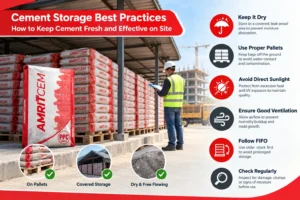
Use good cement of the right grade. Fresh, quality cement, stored dry and matched to the job, is the foundation of strong concrete.
Get the mix right. Use a proper mix design with clean aggregates and correct proportions, not a guessed handful of this and that.
The Bottom Line
Weak concrete doesn’t shout. It whispers — through cracks, rust stains, dusting, seepage, and sagging — and it counts on you not listening. Learn the signs, take the serious ones to an engineer, and above all, build strong from the start: control the water, cure for at least seven days, compact well, and use good cement.
At Amrit Cement, we make cement built to give your concrete real, lasting strength from roof to foundation — because the skeleton of your home is not the place to take chances. To find your nearest dealer and build with concrete you can trust, visit amritcement.com
Strong concrete isn’t luck. It’s how you build it.
Frequently Asked Questions
What are the Most Common Signs of Weak Concrete?
The first telltales to look out for are big cracks – especially those that are wide or slanting – along with honeycombing that lets you see inside and gaps between stones. You might also notice spalling or flaking that brings rust spots to the surface, or a surface that starts to crumble and dust all over the place. White patches with seepage and efflorescence and slabs or beams that are sagging under their own weight are all pretty clear signs that the concrete is not as strong as it should be and is due for some attention.
What Causes Concrete to be Weak in the First Place?
The number one reason is simply using too much water in the mix, which makes the whole thing a lot weaker. It also affects strength directly because of the higher water-cement ratio it gives you. Other big factors are poor or skipped curing – there’s just no substitute for getting that right – bad compaction that leaves air pockets all over the place, using old or low-quality cement that’s gotten past its best-by date, and then adding even more water on site because the mix seemed too stiff.
Are All Cracks in Concrete a Sign of Weak Concrete?
Not always – though they can be a problem at some point. Fine cracks on the surface that appear because the concrete dried out too fast or because of poor curing time are usually less of an issue – but they’re still something worth noting. The kind of cracks that are a real cause for concern are the wide, deep or slanting ones that are just getting bigger or cut through the concrete right through to the other side. Those are the ones that might signal a more serious structural problem – so it’s probably a good idea to get one of the engineers in to take a look.
How Can I Make My Concrete Stronger?
The first thing is to get the water just right so you’re not over or under using it. Then let the concrete sit in a nice damp spot for at least a week before touching it – that can really make a big difference. You also need to compact it as you go to avoid getting air pockets stuck in there & use fresh, high-quality cement of the right grade that’s mixed up the way it’s meant to be mixed. Of course, just keeping it damp and let it cure can actually boost its strength a lot without having to spend a fortune.