Your Contractor Says, “This One Is Better.”
Q. Better how?
That is the question many homeowners forget to ask. Better because it is stronger?
Q.More durable?
Better suited to your climate? Easier for his team to work with? Or simply cheaper and available at the shop he normally buys from?
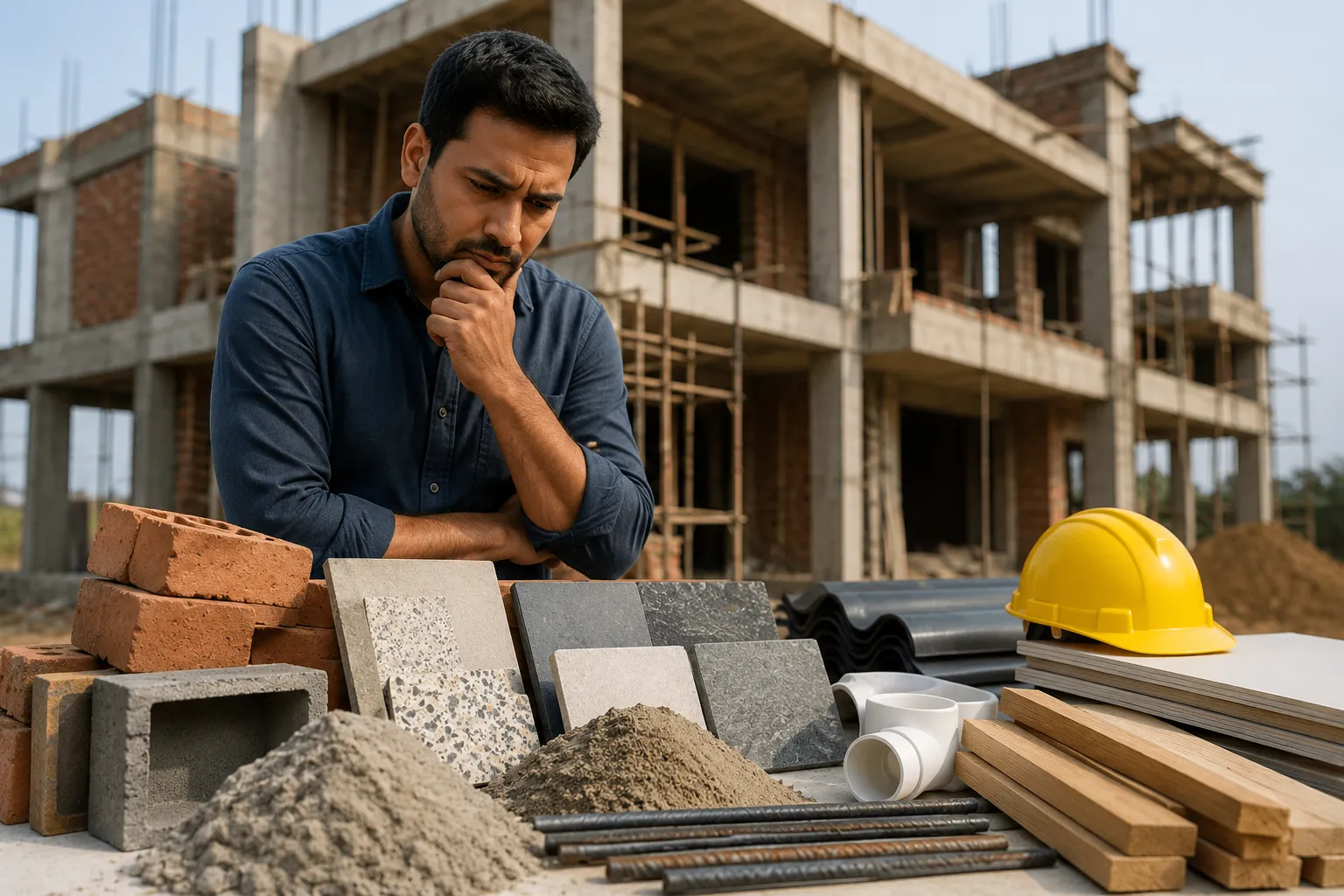
A house can contain hundreds of material decisions. Cement. Steel. Bricks. Sand. Pipes. Waterproofing. Electrical wires. Tiles. Paint. Doors. Windows. And one of the biggest home building mistakes is treating all those purchases as shopping decisions.
They aren’t.
They are performance decisions. Some materials carry your house. Some protect it from water. Some disappear permanently inside walls. And some are mainly there to look good.
Good Construction Material Selection begins by knowing which is which.
Mistake 1: Choosing a Brand Before Choosing the Specification
Homeowners often begin backwards.
“Which cement brand should I buy?”
“Which steel company is best?”
“Which waterproofing brand should we use?”
Brand comes later.
First establish what the material needs to do.
For cement, that could mean choosing between OPC and PPC according to the application and engineering requirement.
For reinforcement, the specified grade and diameter matter.
For pipes, pressure rating and intended application matter.
For waterproofing, the exposure and substrate matter.
The best construction materials are not simply products from recognised brands.
They are products with the correct specification for the job.
Specification first.
Brand second.
Mistake 2: Assuming More Strength Is Always Better
This happens frequently with cement.
53 sounds better than 43.
So OPC 53 must be the better cement everywhere.
Not quite.
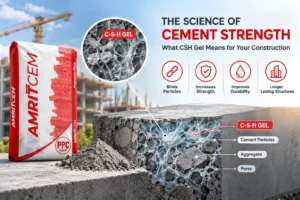
OPC 53 develops higher early strength and can be valuable for structural applications where that performance is required.
But plastering and ordinary masonry have different demands. Workability, bonding, heat development and long-term performance can matter more than unnecessarily high early strength.
PPC, for example, is widely used across masonry, plastering and durability-focused concrete applications.
The same principle applies elsewhere.
A material should not be selected because one number on its specification sheet is bigger.
It should be selected because its complete performance matches the application.
Mistake 3: Buying on Price Per Unit Instead of Cost in Use
Dealer A offers cement ₹10 cheaper per bag.
Dealer B offers bricks ₹1 cheaper per piece.
Easy decision?
Do the complete calculation first.
Poor dimensional consistency in bricks can increase mortar and plaster consumption.
Low-quality sand may affect workability and concrete or mortar quality.
Inferior plumbing materials may save money today and require breaking a bathroom wall later.
The cheapest purchase price and the lowest construction cost are not always the same thing.
When choosing building materials, consider:
Purchase price + wastage + labour impact + maintenance + replacement risk.
A ₹5,000 saving that creates a ₹50,000 repair is not saving.
It is delayed spending.
Mistake 4: Buying Cement Without Checking How Old It Is
A cement bag looks like a cement bag.
That makes this mistake easy.
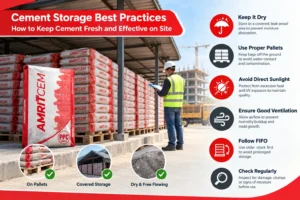
Cement is hygroscopic. It reacts with moisture, including moisture absorbed during poor storage.
Prolonged storage can also affect its performance.
Check the manufacturing or packing information on the bag and prefer fresh stock. Purchase from a reliable authorised dealer and inspect bags for moisture damage or hard lumps.
Then store them correctly on site.
Because buying good cement and leaving it against a damp wall is a surprisingly efficient way to turn a good purchase into a bad one.
Mistake 5: Looking at Steel Price but Not What Is Being Delivered
Reinforcement disappears inside concrete.
Once the slab is cast, checking it becomes considerably harder.
Verify that the reinforcement matches the structural drawings and specified grade.
Check bar diameters.
Check quantity.
Check manufacturer identification and applicable certification.
And don’t casually substitute one diameter for another because the required bar isn’t available that morning.
Structural reinforcement is designed.
It isn’t improvised at the steel shop.
This is one of those construction quality tips worth being stubborn about.
Mistake 6: Treating Sand as Just Sand
It looks simple enough.
A pile of sand arrives.
Construction continues.
But sand quality affects concrete, mortar and plaster.
Particle grading, cleanliness, excessive silt, clay and other impurities can influence water demand, bonding and overall performance.
The sand suitable for one application may also not be ideal for another.
Ask where it came from.
Check whether it meets the required specification.
Test where necessary.
And don’t allow additional water to become the automatic solution whenever a poor mix becomes difficult to work with.
Sometimes the problem isn’t the mason.
It is the material underneath his trowel.
Mistake 7: Ignoring Aggregate Quality Because It Will Be Hidden in Concrete
Aggregates make up a substantial portion of concrete.
Yet homeowners often spend more time selecting bathroom tiles than checking what is going into their columns.
Aggregates should be appropriately graded, clean, strong and suitable for the specified concrete.
Dirty or poorly graded aggregates can affect workability, water requirement and concrete performance.
Remember what you are buying.
Cement does not become concrete by itself.
Every ingredient matters.
Mistake 8: Using the Same Material Logic Everywhere
A roof and a bedroom wall do not experience the same conditions.
Neither do a foundation and an internal floor.
Materials should respond to exposure.
For example:
Foundation: soil and moisture exposure matter.
Roof: rain, heat, drainage and thermal movement matter.
Bathroom: repeated water exposure matters.
External wall: sun and rain matter.
Internal wall: finish and indoor conditions matter.
This becomes particularly important in high-rainfall regions such as Assam and Meghalaya.
Good Construction Material Selection should consider the environment the material will spend its life in.
Not merely the environment of the hardware shop where you bought it.
Mistake 9: Spending More on Visible Materials Than Hidden Ones
This one is understandable.
You can see tiles.
You can touch faucets.
You can show someone your kitchen.
Nobody visits your new house and asks to see the waterproofing membrane below the bathroom.
So budgets slowly move towards what can be seen.
Premium tile.
Cheaper waterproofing.
Designer light.
Lower-grade concealed pipe.
Expensive paint.
Compromise on electrical wire.
Wrong priorities.
When the budget becomes tight, protect materials that are structural, safety-critical, moisture-protective or difficult to replace.
You can change a light fitting on Sunday.
Replacing a concealed drainage line may require a demolition crew.
Mistake 10: Changing Materials Midway Without Checking Compatibility
The specified waterproofing product isn’t available.
So someone buys another.
The selected tile adhesive changes.
A different cement is introduced halfway through a planned pour.
One chemical admixture is replaced by another.
“Same thing, sir.”
Maybe.
Maybe not.
Construction materials interact.
Admixtures need compatibility with cementitious materials.
Coatings need suitable substrates.
Waterproofing layers need compatible primers and finishes.
Concrete pours require controlled materials and mix designs.
Never assume two products are interchangeable merely because they perform broadly similar jobs.
Get substitutions approved by the responsible engineer or technical professional.
Mistake 11: Buying Too Much Material Because the Price Is Good
A discount feels like savings. Until storage ruins the material. Cement needs protection from moisture. Steel should be stored to minimise contamination and harmful corrosion. Tiles need protection from breakage. Waterproofing chemicals and paints have manufacturer-specified storage conditions and shelf lives.
So before buying three months of material at once, ask:
Where will it stay?
For how long?
Under what conditions?
Material procurement should follow the construction programme. Not excitement over today’s dealer price.
Mistake 12: Accepting a Sample and Never Checking the Actual Delivery
You approve one brick.
Five thousand arrive.
You select one tile.
Fifty boxes arrive.
You agree on one specification. Something slightly different reaches the site.
Check deliveries.
Match invoices and purchase orders against the specified product. Inspect batch information where relevant. Count quantities. Check damage. Keep records.
For critical materials, retain certificates and test reports where required. Quality control does not end when you say yes to the salesperson. It ends when the correct material has been used correctly.
Before Buying Anything Important, Ask Five Questions
A homeowner does not need to become a civil engineer. But these questions can prevent many common construction mistakes:
- What exactly has the engineer or architect specified?
- Why is this material suitable for this particular application?
- Does it comply with the relevant standard or required certification?
- Is the material genuine, fresh and properly stored?
- What happens if I replace it with the cheaper alternative being suggested?
If your supplier or contractor can answer those clearly, good.
If every answer is simply “Everyone uses this,” ask again.
Choose the Dealer Along With the Material
Material quality does not stop at the factory gate. It has to reach your construction site correctly. For cement especially, a dependable dealer should provide genuine stock, reasonable stock rotation, proper storage and timely delivery.
Amrit Cement’s OPC and PPC products can be selected according to the construction application and engineer’s requirements, but they should also be purchased through reliable authorised channels and stored correctly after delivery.
The same logic applies to every major material. A good manufacturer plus poor storage is still a poor outcome.
Your House Will Remember the Materials You Forget About
Once construction is finished, most materials disappear. Steel goes inside concrete. Pipes disappear behind tiles. Wires disappear into walls. Waterproofing gets covered. Cement becomes part of the structure itself. You stop seeing them. Your house doesn’t. It depends on them every day.
So, when choosing building materials, don’t ask only what looks better or what costs less.
Ask what the material is supposed to do. Where it will be used. What conditions it will face. How difficult it will be to replace. And whether the cheaper choice is genuinely equivalent.
The biggest home building mistakes often do not look like mistakes when they are made.
Sometimes they look like savings. Sometimes convenience. Sometimes “this will also work.” Good material selection is simply refusing to discover the difference after the wall has been plastered over.
Frequently Asked Questions
1. What is Construction Material Selection?
Construction Material Selection is the process of choosing materials according to structural requirements, application, exposure conditions, applicable standards, durability, cost and compatibility with the overall building system.
2. Should homeowners always choose the most expensive construction materials?
No. Higher price does not automatically mean better suitability. Select the correct specification and required performance first, then compare compliant products on quality, supply reliability and cost.
3. What should I check before buying cement?
Check the cement type required for the application, applicable BIS marking, manufacturing or packing information, bag condition, dealer reliability and storage conditions. Avoid damp or heavily hardened bags.
4. Which construction materials should homeowners avoid compromising on?
Be particularly careful with structural materials, reinforcement, cement and concrete inputs, waterproofing, concealed plumbing, electrical safety components and other materials that are difficult or expensive to replace later.
5. Is it safe to change a construction material recommended by the engineer?
Do not make significant substitutions without approval. A replacement may differ in strength, durability, compatibility or application requirements even when it appears similar.
6. How can homeowners reduce construction material wastage?
Estimate quantities before purchasing, order according to the construction schedule, store materials correctly, inspect deliveries and monitor site consumption against planned quantities.