White Salt Deposits on Walls: Causes, Removal and Prevention
A newly plastered wall looks clean when the mason finishes. A few weeks later, white powder starts appearing near the bottom. Someone wipes it away. After the next spell of rain, it returns.
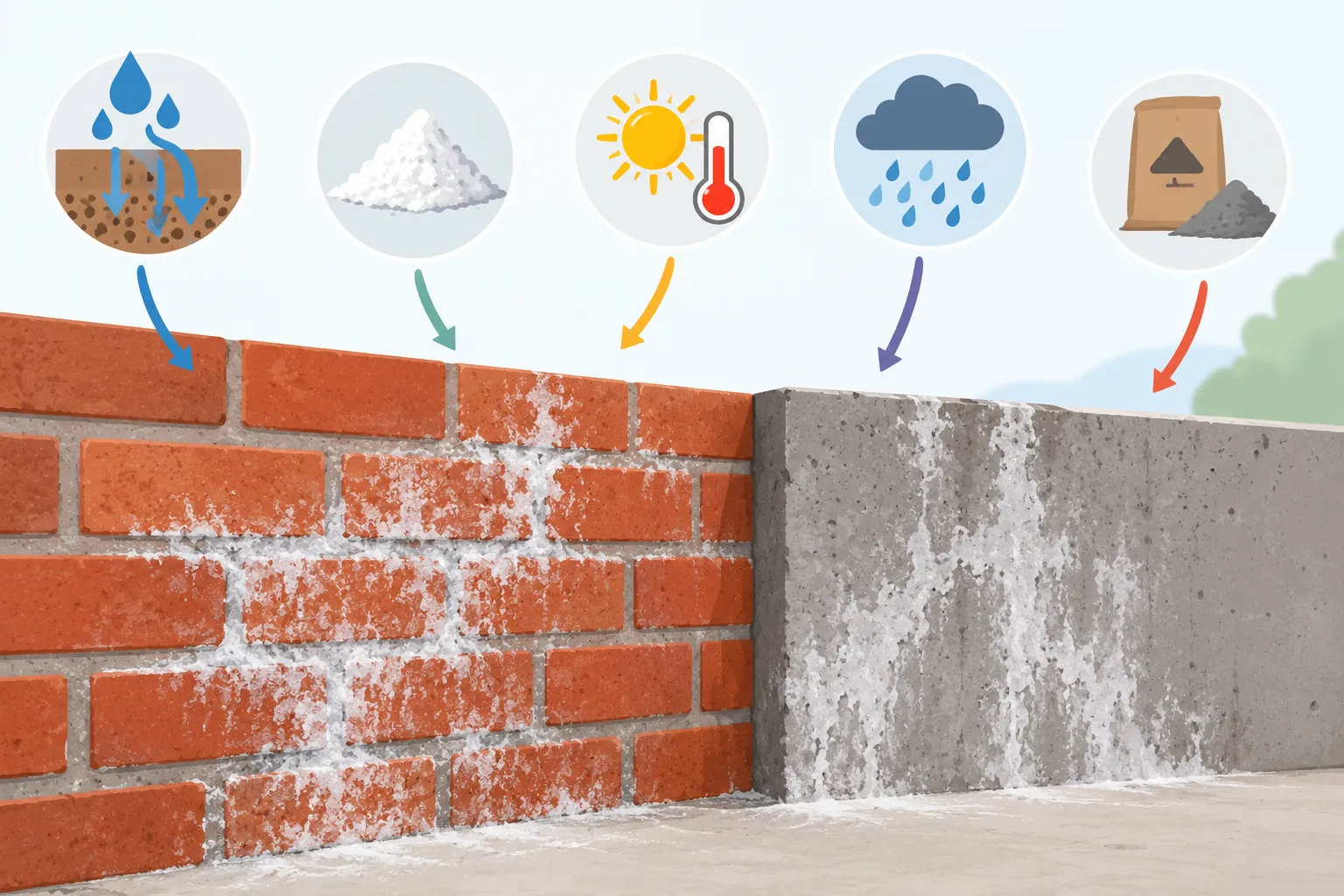
These white salt deposits on walls are commonly called efflorescence. They are often a sign that moisture is moving through the building material and bringing dissolved salts towards the surface.
The marks can spoil a new finish. But the bigger question is where the water is coming from. Cleaning the white powder without finding the moisture source may bring the same problem back.
What is efflorescence?
Bricks, mortar, concrete, soil and water can contain soluble salts. When water passes through porous materials, it may dissolve some of these salts. As the water reaches an exposed surface and evaporates, the salts can remain behind as a white or pale deposit.
That is efflorescence. It may appear as a powdery film, streaks or patches, particularly near joints, corners and damp areas.
Not every white mark is efflorescence. Paint residue, lime staining and other surface deposits can look similar. An experienced professional can help identify the material before recommending cleaning or repair.
Why do white deposits appear after construction?
A new building contains plenty of moisture. Bricklaying, concrete work, plastering and curing all involve water. Some of that water needs time to leave the materials.
If soluble salts are present, drying can carry them towards the surface. Early efflorescence may therefore appear even when the building has not developed a serious leakage problem.
However, repeated deposits in the same place deserve attention. They can show that water is continually entering through a roof, external wall, plumbing line, ground contact or poorly protected joint.
The pattern often offers clues. A band near the floor may suggest rising damp or moisture from the ground. Stains below a roof edge may point towards rainwater entry. Patches around a pipe may signal leakage. These are clues, not proof; inspection should confirm the source.
The three things needed for efflorescence
There must be soluble salts, enough moisture to dissolve and move them, and a path for the moisture to reach a surface where it can evaporate.
Remove or control one of these conditions and the problem can often be reduced. That is why good drainage, suitable materials and water management matter more than repeatedly painting over the marks.
Using better cement alone will not guarantee a wall free of efflorescence. Salts may come from bricks, sand, water, ground conditions or surrounding materials. Moisture can also enter through construction details that have nothing to do with the cement brand.
Common sources of water in Assam and Meghalaya
Heavy seasonal rainfall makes moisture management a practical concern across Northeast India. Water can collect near plinths, run down unprotected walls or enter through faulty roof details.
On low-lying plots, soil near the foundation may remain wet for long periods. On sloping sites, runoff from higher ground may move towards a wall if drainage is poorly planned.
Exterior plaster and paint can reduce weather exposure when applied as a suitable system, but they do not replace a damp-proof course, sound roof details or effective site drainage.
A wall that keeps absorbing rainwater can develop fresh salt deposits even after a careful cleaning.
How to inspect the wall before cleaning it
Begin by noting when the marks appear. Do they follow heavy rain? Are they worse during the drying season? Do they return after mopping? Are they limited to one room or present on an outside wall too?
Check nearby plumbing, roof outlets, window joints, external cracks and the ground level outside. Look for damp patches, peeling paint, soft plaster or persistent wetness.
For repeated or widespread deposits, get the source assessed before spending money on a new finish. If moisture is coming through the foundation or a failed waterproofing detail, a surface treatment will have limited value.
Can white salt deposits be removed?
Light, dry deposits may sometimes be brushed off with a suitable stiff, non-metallic brush after the surface has dried. Collect the powder rather than spreading it through the room.
Cleaning methods depend on whether the surface is brick, plaster, concrete or a painted finish. Water washing can dissolve salts and sometimes carry them back into the wall, allowing deposits to reappear on drying. Strong acids or unsuitable cleaners can damage mortar, concrete or coatings.
Avoid applying chemicals simply because they are advertised as stain removers. Follow the material manufacturer’s recommendations and seek professional advice for stubborn deposits.
Most importantly, allow the wall to dry after the actual moisture problem has been corrected before repainting or applying another finish.
Preventing efflorescence during construction
Choose suitable bricks, sand, cement and clean mixing water. Keep materials away from contaminated ground and protect stockpiles from unnecessary wetting.
Provide a properly designed damp-proof course and plinth protection. Make sure the site drains rainwater away from the building instead of directing it towards the foundation.
Pay attention to roof slopes, parapet junctions, window edges and external wall details. Follow correct plastering and curing practices, then allow adequate drying before applying compatible finishes.
A neat paint finish is the last step. Water control begins much earlier, often while work is still below ground level.
What if the wall is already painted?
Do not cover fresh deposits with another coat of paint. If moisture is active, the new paint may blister or peel. The salt can also return through weak spots.
Find and correct the source of moisture first. Then remove loose deposits and damaged finish by a method suitable for the wall. Allow drying and repair the substrate as required before applying an appropriate coating system.
If the wall shows significant cracking, persistent seepage or deteriorating mortar, the problem may go beyond appearance. Ask a qualified professional to inspect it.
Where Amrit Cement fits in
We at Amrit Cement supply OPC and PPC for suitable construction applications. AmritCem PPC can be considered for masonry and plastering where it meets the project requirement. Proper mixing, application and curing are still essential.
Through our Amrit Support, the company lists guidance on raw-material selection and construction practices. This can help homeowners understand why moisture, sand quality and mortar preparation matter. However, no cement can replace a correctly executed damp-proof course or a sound waterproofing system.
The useful question is not simply, ‘Which cement will stop the white marks?’ It is, ‘Why is moisture reaching this wall?’
A simple homeowner checklist
- Photograph the deposit and note when it appears.
- Check rainwater drainage, plumbing and ground moisture.
- Identify the deposit before using cleaning chemicals.
- Correct leaks and damp-proofing defects before repainting.
- Use suitable materials and clean water for new work.
- Allow repaired surfaces to dry before finishing.
FAQs
Are white salt deposits harmful to the structure?
Light surface efflorescence is often mainly an appearance issue. Persistent moisture or material deterioration, however, should be investigated because the underlying water problem may be more serious.
Does efflorescence mean poor cement was used?
Not necessarily. Salts and moisture may come from bricks, sand, soil, water or other construction materials.
Can I paint directly over the white powder?
It is better to identify and correct the moisture source, remove loose deposits and prepare the wall properly before painting.
Will washing the wall with water solve it?
Not always. Water may dissolve deposits temporarily but can also bring salts back during drying. Use a method suitable for the surface.
Can AmritCem PPC prevent efflorescence completely?
No cement can guarantee this. Suitable materials, sound damp-proofing, drainage, correct curing and moisture control work together to reduce the risk.