Clinker comes out of kiln is not the end of the cement manufacturing process but a start of the next process. Clinker is just the hard, semi-finished material further being used in producing Cement (the end product).
Cement grinding unit is where this process takes place, or we can say that the real transformation happens inside the cement grinding unit. This is the stage where clinker is converted into a fine powder that gives cement its setting time, strength development, workability, and final performance on site. For a homeowner or builder, understanding the cement grinding unit process helps answer one important question:
Why does cement quality vary even when the raw material looks the same?
Let’s understand the practical realities behind grinding and why this stage matters.
The Real Question Is Not Just How Cement Is Made
It is how clinker becomes usable cement. Clinker alone cannot be used directly in construction. It is too hard, too reactive, and does not offer controlled setting behaviour. To make it usable, clinker must be ground with the right materials in the right proportion. This process decides:
- How quickly cement sets
- How smoothly it mixes with water
- How well it gains strength
- How consistently it performs on site
- How suitable it is for OPC or PPC production
So, the cement grinding unit process is not just a finishing step. It is a quality-defining step.
What Enters a Cement Grinding Unit?
A grinding unit receives clinker from a cement factory or integrated cement plant. Along with clinker, other materials are added depending on the cement type being produced.
For OPC cement, the main materials are:
- Clinker
- Gypsum
For PPC cement, the materials generally include:
- Clinker
- Gypsum
- Fly ash or pozzolanic material
Gypsum controls setting time. Fly ash improves long-term durability in PPC. Clinker provides the basic strength-forming compounds. The role of the grinding unit is to bring all these materials together and convert them into a uniform, fine cement powder.
Why Gypsum Is Added During Grinding
Gypsum is not only a filler. It plays a critical role in controlling how cement behaves after water is added. It provides a decent time gap for cement to set and increase it’s setting time for better use on site. Without gypsum, cement may set too quickly and become difficult to use on site. This quick setting can affect:
- Mixing time
- Placement quality
- Workability
- Finishing
- Strength development
Gypsum gives workers enough time to mix, place, compact, and finish the concrete or mortar properly. This is why gypsum proportioning is not a small detail. It directly affects construction quality.
Step 1: Clinker Storage and Quality Checking
Before grinding begins, clinker is stored and tested. Good grinding cannot correct poor clinker. If clinker quality is inconsistent, the final cement will also show inconsistent performance. At this stage, manufacturers check important parameters such as:
- Chemical composition
- Free lime content
- Clinker hardness
- Mineral formation
- Moisture level
This is where experienced cement manufacturers separate routine production from quality-controlled production. A good cement factory does not send clinker blindly into the mill. It tests, verifies, and controls the material before grinding.
Step 2: Material Feeding and Proportioning
Once clinker and additives are ready, they are fed into the grinding system in controlled proportions. This stage looks simple but has a major impact on cement performance.
- If gypsum is too low, cement may set too fast.
- If gypsum is too high, setting and strength behaviour can be affected.
- If fly ash is not properly proportioned in PPC, durability and strength consistency may vary.
Controlled feeding ensures that every batch maintains the required composition. This is why automated dosing systems are important in modern grinding units. They reduce human error and maintain product consistency.
Step 3: Grinding the Clinker
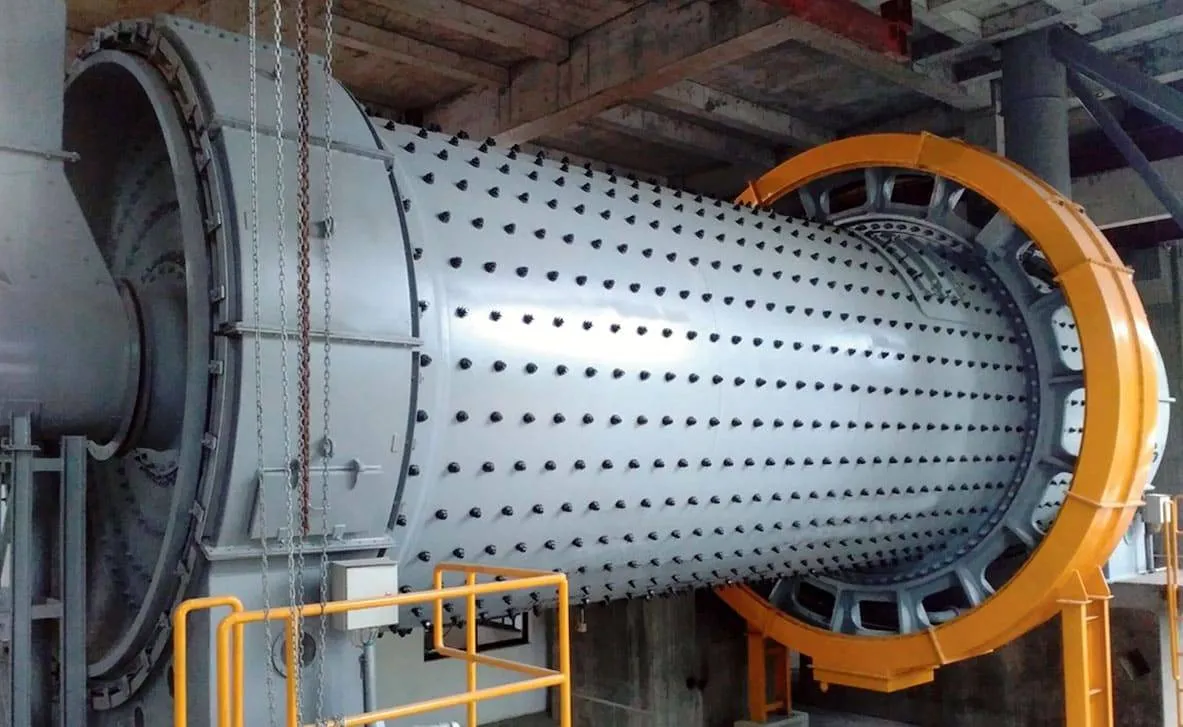
This is the main stage of the cement grinding unit process. Clinker is ground into a fine powder using equipment such as:
- Ball mills
- Vertical roller mills
- Roller presses
- High-efficiency separators
The objective is not simply to crush clinker. The objective is to create the right particle size distribution. Cement that is too coarse may gain strength slowly. Cement that is too fine may demand more water and generate higher heat during hydration. The right grinding balance helps achieve:
- Better strength development
- Good workability
- Controlled setting
- Improved finish
- Consistent performance
This is where mill control becomes critical.
Fineness: The Detail That Changes Cement Performance
Fineness is one of the most important outcomes of grinding. Finer cement reacts faster with water. This can improve early strength. But excessive fineness can also increase water demand and affect workability. For home construction, this matters because cement must perform well in:
- Concrete
- Mortar
- Plaster
- Flooring
- Masonry work
Good cement is not just very fine. Good cement has the right fineness for balanced performance. That balance comes from controlled grinding and proper classification.
Step 4: Separation and Classification
After grinding, the cement particles do not all come out at the same size. Some particles are fine enough. Some are still too coarse. This is where separators come into the process. A separator classifies the material. Fine particles move forward as finished cement. Coarse particles are sent back to the mill for further grinding. This closed-loop system improves consistency and prevents uneven cement quality. For builders and homeowners, this means better reliability from bag to bag.
Step 5: Blending for OPC and PPC
The cement grinding unit process changes depending on the cement type. For OPC, clinker and gypsum are ground together to produce Ordinary Portland Cement. For PPC, fly ash or pozzolanic material is added along with clinker and gypsum. This is where cement character changes. OPC focuses more on early strength. PPC focuses more on long-term durability and lower permeability. The grinding unit must ensure uniform blending so that cement performance remains consistent across every batch. If blending is poor, some bags may behave differently on site. That is why quality grinding is not only about machinery. It is also about process control.
Step 6: Cement Storage in Silos
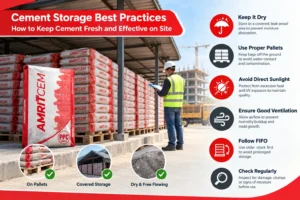
After grinding, finished cement is stored in silos. This storage stage protects cement from moisture and contamination. Moisture is one of cement’s biggest enemies. If cement absorbs moisture before use, it can form lumps and lose performance. Good silo management helps maintain:
- Freshness
- Flowability
- Strength potential
- Packing quality
This is one reason why cement should always be stored carefully even after it reaches the construction site.
Step 7: Packing and Dispatch
Once cement passes quality checks, it is packed in bags or dispatched in bulk. Packing quality matters because cement continues to be sensitive to moisture during storage and transport. Good packaging helps protect cement from:
- Humidity
- Rain exposure
- Handling damage
- Moisture absorption
For buyers, this is why cement bags should always be checked before purchase. Avoid bags that are torn, wet, hardened, or older than recommended storage duration.
Why Grinding Quality Matters on Site
A homeowner may never see a grinding unit. But the effect of grinding quality is visible on site. Poor grinding can affect:
- Setting time
- Concrete workability
- Plaster finish
- Strength development
- Crack resistance
- Water demand
- Long-term durability
Good grinding gives cement predictable behaviour. Predictability is important because construction sites already have many variables. Labour skill, water quality, sand quality, curing discipline, and weather conditions all affect final performance. The cement should not add another uncertainty.
Cement Grinding Unit vs Full Cement Factory
Many people search for a “cement factory near me” without understanding the difference between a full cement plant and a grinding unit. A full cement factory usually includes:
- Raw material crushing
- Raw meal preparation
- Kiln operation
- Clinker production
- Cement grinding
- Packing
A cement grinding unit mainly handles:
- Clinker storage
- Additive feeding
- Grinding
- Blending
- Storage
- Packing
Both are important. But the grinding unit is where the final cement identity is created. This is where clinker becomes OPC, PPC, or another cement type.
The Hidden Cost of Poor Grinding
Poor grinding does not always show up immediately. It may appear later as site-level problems. These may include:
- Faster or delayed setting
- Uneven plaster finish
- Higher water demand
- Reduced workability
- Lower strength consistency
- Increased cracking risk
Many times, these problems are blamed on labour or site practice. Sometimes that is true. But inconsistent cement grinding can also be one of the hidden reasons. This is why reliable cement manufacturers invest heavily in grinding control, separator efficiency, and laboratory testing.
What Experienced Builders Check Before Buying Cement
Experienced builders do not judge cement only by brand name. They check practical indicators. Before buying cement, they look at:
- Manufacturing date
- Bag condition
- Cement texture
- Lump formation
- Dealer storage condition
- Consistency from previous use
- Suitability for the application
Fresh cement should feel smooth and free-flowing. It should not contain hard lumps. The bag should not show signs of moisture damage. These simple checks can prevent many site problems.
How Cement Grinding Affects PPC Performance
PPC cement depends heavily on proper blending and grinding. Fly ash must be uniformly distributed in the cement. If blending is not consistent, PPC may not deliver its expected durability benefits. Properly processed PPC offers:
- Better workability
- Lower heat of hydration
- Improved long-term strength
- Reduced permeability
- Better resistance to moisture-related issues
This is why the grinding stage is especially important for PPC quality. The pozzolanic material must not simply be added. It must be properly integrated.
How Cement Grinding Affects OPC Performance
OPC performance also depends strongly on grinding control. For OPC, fineness influences early strength and setting behaviour. Well-ground OPC provides:
- Faster strength development
- Reliable setting time
- Better bonding
- Consistent RCC performance
But overly fine grinding can increase heat generation and water demand. That is why experienced manufacturers aim for controlled fineness, not unnecessary fineness.
Sustainability in the Grinding Process
Grinding consumes a significant amount of energy in cement production. Modern grinding units focus on reducing energy use through:
- High-efficiency separators
- Vertical roller mills
- Roller press systems
- Heat recovery
- Process automation
- Better material handling
Efficient grinding helps reduce power consumption and improves production sustainability. For the cement industry, this matters because quality and environmental responsibility must move together.
A Practical Buyer’s Perspective
For a homeowner, the cement grinding unit process may seem distant from daily construction decisions. But it directly affects the cement used in your foundation, slab, plaster, and masonry.
Before choosing cement, ask:
- Is the cement fresh?
- Is the bag properly sealed?
- Is the cement suitable for the application?
- Does the brand maintain consistent quality?
- Has the cement been stored properly?
- Is the dealer keeping bags away from moisture?
These questions are more useful than choosing cement only by price.
Final Perspective
The cement grinding unit process is the stage where clinker turns into usable cement. It controls fineness, setting time, strength development, workability, and final performance.
- Clinker gives cement its foundation.
- Gypsum controls its setting behaviour.
- Fly ash changes its durability profile in PPC.
Grinding brings everything together. For builders and homeowners, this means one thing clearly:
Cement quality is not the bag label alone. It is actually the whole process where the raw material turns into clinker and then carefully processed, ground, blended, tested, packed, stored, and finally used on site. A good cement grinding unit does not just make cement powder. It makes cement predictable, workable, durable, and ready for real construction conditions.