
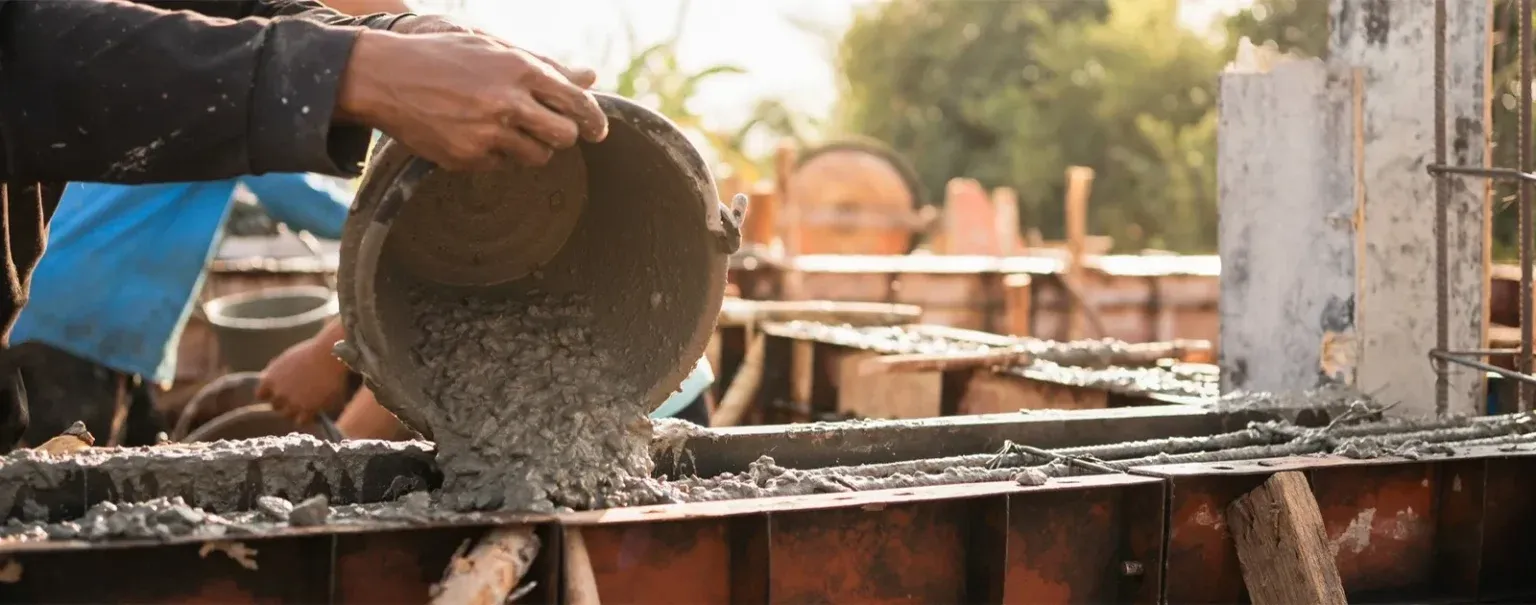
In any construction project, getting the concrete mix right is more important than most people realize. One small mistake in the mix can affect the strength, durability, and life of the structure. Among all the factors involved, the water-cement ratio plays a very important role.
Whether you are building a house, a commercial space, or even a small slab, understanding how much water should be mixed with cement can make a big difference. In this blog, we will break down what the water-cement ratio is, why it matters, and how it directly affects construction quality in a simple and practical way.
What is Water Cement Ratio?
The water-cement ratio is simply the proportion of water to cement used in a concrete mix.
It is usually written as a ratio like 0.4, 0.5, or 0.6. For example, a ratio of 0.5 means that for every 1 kg of cement, 0.5 kg (or liters) of water is used.
This ratio might look like a small detail, but it controls how the concrete behaves—from mixing to hardening and even years after construction.
Why Water is Needed in Cement
Water is not just added to make the mix easier to handle. It plays a key role in a chemical process called hydration. When water reacts with cement, it forms a paste that binds sand and aggregates together to create solid concrete.
Without enough water, this reaction will not happen properly. But if too much water is added, the concrete becomes weak.
This is why maintaining the correct water-cement ratio is critical.
How Water Cement Ratio Affects Strength
One of the most important things to understand is the w/c ratio effect on strength.
- Lower water-cement ratio = Higher strength
- Higher water-cement ratio = Lower strength
When you add too much water, the concrete mix becomes loose. After it hardens, the extra water leaves behind tiny empty spaces inside the concrete. These spaces reduce strength and make the structure less reliable.
On the other hand, when the water content is controlled properly, the concrete becomes dense and strong. There are fewer gaps, and the bonding between materials is much better.
This is why engineers always focus on maintaining the right concrete mix water ratio for every project.
What Happens When There is Too Much Water?
Adding extra water may seem helpful during construction because it makes the mix easier to pour and spread. But it comes with serious problems:
- Reduced Strength
Excess water weakens the bond between cement and aggregates, leading to lower load-bearing capacity. - Cracks After Drying
As water evaporates, it leaves behind spaces. This can cause shrinkage cracks on the surface. - Poor Durability
Water-rich concrete allows moisture and chemicals to enter easily, which can damage the structure over time. - Surface Dusting
You may notice powder forming on the surface of floors or slabs. This happens when the top layer is weak due to excess water.
So, while adding water may make work easier in the short term, it creates long-term problems.
What Happens When There is Too Little Water?
Using less water than required also creates issues:
- Difficult to Mix and Place
The concrete becomes stiff and hard to work with. - Poor Compaction
Air pockets may remain inside the mix because it cannot settle properly. - Incomplete Hydration
If there isn’t enough water, cement will not react fully. This reduces the final strength.
This is why the goal is not to use less water blindly, but to maintain the correct water-cement ratio.
Ideal Water Cement Ratio for Construction
The ideal ratio depends on the type of construction and strength requirements.
In most cases:
- For general construction: 0.45 to 0.60
- For stronger concrete: 0.40 to 0.45
Lower ratios are used where higher strength is needed, such as columns, beams, and slabs.
However, reducing water also reduces workability. So, adjustments are often made using proper mixing techniques rather than simply adding more water.
Practical Site Mistakes to Avoid
On many construction sites, workers add water without measuring it. This is one of the biggest reasons for poor-quality concrete.
Here are some common mistakes:
- Adding Water for Easy Mixing
Workers often add extra water to make the mix smoother. This directly affects strength. - Not Measuring Water Properly
Using buckets without standard measurement leads to inconsistency. - Re-tempering the Mix
Adding water again after the mix has started setting weakens the structure. - Ignoring Weather Conditions
In hot weather, water evaporates quickly. In such cases, proper curing is needed instead of adding excess water.
Avoiding these mistakes helps maintain the right concrete mix water ratio.
Workability vs Strength – Finding the Balance
A common challenge in construction is balancing workability and strength.
- More water → easy to work with but weak
- Less water → strong but hard to handle
The solution is not to compromise strength for convenience. Instead, proper mixing, vibration, and compaction techniques should be used.
Good-quality cement also plays a role here. Reliable brands like Amrit Cement are designed to perform consistently, helping maintain a better balance between workability and strength.
Role of Curing After Mixing
Even if the water-cement ratio is perfect, the job is not complete without curing.
Curing means keeping the concrete moist after it has been placed. This ensures that the hydration process continues properly.
If curing is ignored:
- Strength reduces
- Surface cracks may appear
- Durability is affected
Proper curing supports the effect of the correct water-cement ratio and ensures long-lasting results.
Why This Matters for End Users
If you are a homeowner or planning construction, you may not be mixing concrete yourself. But understanding the water-cement ratio helps you ensure quality work.
Here’s how it helps you:
- You can monitor if extra water is being added unnecessarily
- You can ask for proper measurement instead of guesswork
- You can ensure better strength and durability in your structure
A small check at the right time can prevent major repair costs in the future.
Choosing the Right Cement Matters Too
While water control is important, the quality of cement also plays a big role.
High-quality cement ensures better bonding, consistent performance, and reliable strength. Brands like Amrit Cement focus on maintaining quality standards so that the mix performs as expected on site.
When good cement is combined with the right concrete mix water ratio, the result is strong and durable construction.
Final Thoughts
The water-cement ratio may seem like a small detail, but it has a huge impact on construction quality. From strength and durability to crack resistance and long-term performance, everything depends on getting this ratio right.
Maintaining the correct water-cement ratio is not about complicated formulas. It is about understanding the basics and following them carefully on site.
Avoid adding extra water for convenience. Focus on proper mixing and curing. And always use reliable cement products for better results.
In construction, small decisions create big outcomes—and the right water-cement ratio is one of those decisions that truly matters.